Imagine leaving the house and coming back to find chewed shoes, restless pacing, or sleepless nights. You didn’t see it happen, but anxiety left its mark.
Every dog owner wants their pet to feel safe and calm, but anxiety often hides in plain sight.
Separation anxiety, noise sensitivity, and hidden stress affect countless dogs. Smart collars promise to catch these moments—but do they really give owners the clarity they need, or just more data to worry over? Can a small device around your dog’s neck truly reveal their hidden stress levels?
Smart collars for anxious dogs promise insights into anxiety, but how accurate are they—and can they genuinely help your dog feel calmer? Let’s uncover what works and what doesn’t.
The Real Question Owners Are Asking
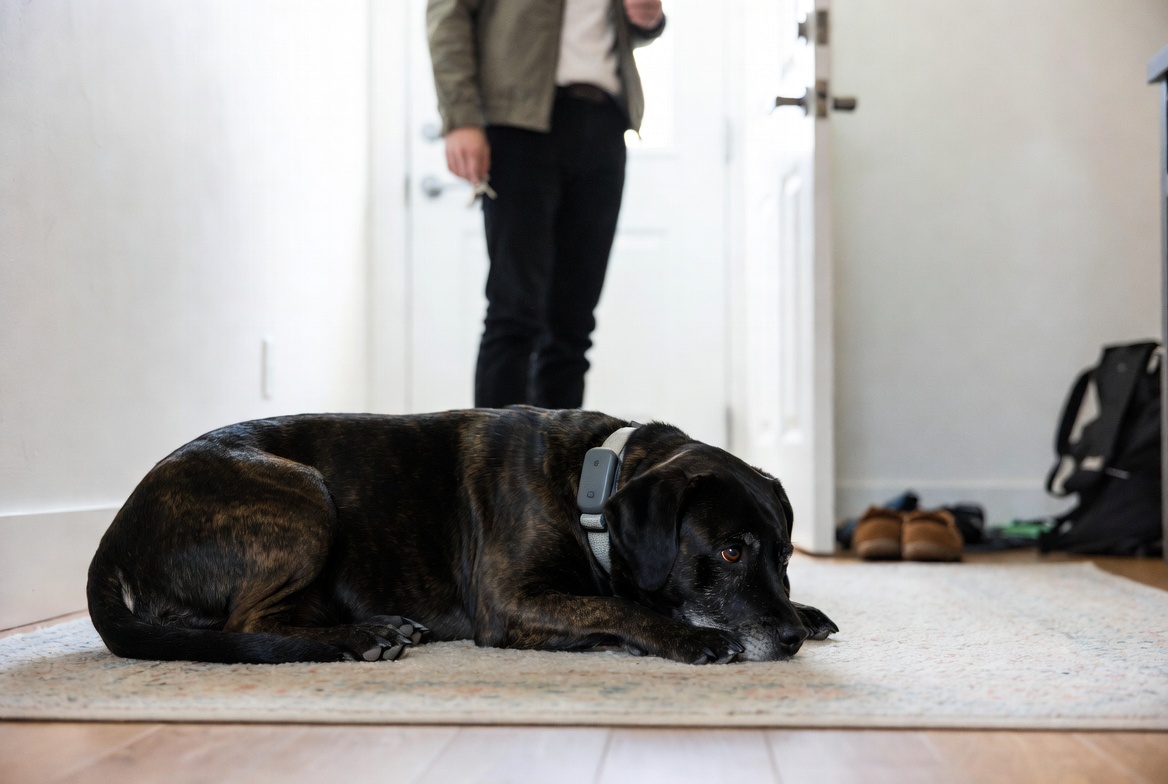
Most dog owners searching for smart collars are not casually browsing pet gadgets. They are usually living with a dog that struggles to relax, settles poorly after stimulation, or behaves differently under stress. What they are really searching for is clarity, not technology.
The promise of smart collars often sounds reassuring because it suggests that data and alerts can explain what a dog is feeling when the owner is not around.
The reality is more restrained. Smart collars observe patterns over time, but they do not calm anxiety, teach coping skills, or replace human judgment.
What “Anxiety” Actually Looks Like in Dogs
Anxiety in dogs is frequently misunderstood because it does not always appear as dramatic behavior. While some dogs bark excessively, chew furniture, or shake visibly, many anxious dogs experience stress in ways that are quiet and easily normalized.
A common example is the dog that seems fine during the day but never truly rests. After walks or play sessions, the dog paces instead of settling, shifts positions constantly, or follows the owner from room to room.
These behaviors are often interpreted as high energy or attachment rather than stress.
Night-time behavior provides another overlooked signal. Some anxious dogs wake repeatedly, reposition themselves often, or move between rooms at night. Owners may assume this is normal restlessness, not realizing that fragmented sleep can indicate chronic anxiety.
Different anxiety types also behave differently. Separation anxiety tends to surface when routines change or owners leave.
Noise sensitivity often spikes unpredictably and fades quickly. Generalized anxiety may never fully disappear, even in familiar environments. When these distinctions are missed, owners often expect smart collars to deliver clarity they cannot provide alone.
What Smart Collars Can Measure That Relates to Anxiety
Smart collars do not interpret emotions. They collect physiological and behavioral signals that may change when a dog experiences stress. Understanding this boundary is essential to using them responsibly.
Measurements such as heart rate, heart rate variability, movement patterns, and sleep disruption can reflect how a dog’s body responds to daily events. For anxious dogs, long-term trends provide far more insight than single alerts or isolated spikes.
For example, one restless night may mean very little. However, repeated nighttime movement combined with elevated resting heart rates can indicate that a dog is not fully relaxing, even during periods that should be calm. Without context, these signals can be misread or overinterpreted.
Once you understand what smart collars can measure, it’s important to know when they truly add value for anxious dogs
When Smart Collars Actually Help Anxious Dogs
Smart collars tend to be most helpful when anxiety is present but not overwhelming, and when it follows patterns that can be observed over several days or weeks. In these situations, the collar acts as a monitoring aid rather than a solution.
Early Detection Before Anxiety Escalates
Many dogs show physiological stress responses long before anxiety becomes obvious through behavior. These early signs are often subtle enough that owners dismiss them as personality traits.
For instance, an owner may notice their dog becoming slightly more restless in the evenings after a change in routine.
A smart collar may reveal that this restlessness coincides with consistently elevated heart rates during those hours. Identifying this pattern early allows adjustments before anxiety becomes more severe.
Supporting Separation Anxiety Management
Separation anxiety is particularly difficult to assess because owners are not present to witness it. A dog may appear calm at departure but remain tense for extended periods afterward.
In real-world use, some owners discover that their dog never truly settles during their absence, while others learn that stress peaks briefly and then resolves.
This distinction matters because it influences whether training adjustments, environmental enrichment, or professional help is needed.
Measuring Progress During Training or Behavior Modification
Training for anxiety requires patience, and progress often occurs in small increments. Owners may feel discouraged when visible behavior changes are minimal.
Smart collar trends can sometimes reveal improvements that are not immediately obvious, such as longer rest periods or improved sleep consistency. This objective feedback helps owners remain consistent rather than abandoning a plan prematurely.
Helping Vets and Trainers Make Better Decisions
Veterinarians and trainers rely on detailed histories. Owner recollections are often influenced by emotion and memory gaps. Objective data can help fill those gaps.
When shared responsibly, smart collar trends may support discussions about whether anxiety is situational, worsening, or improving.
This information can help guide decisions about training intensity, environmental changes, or medical evaluation.
When Smart Collars Do NOT Help (And Often Make Things Worse)
Despite their benefits, smart collars are not appropriate for every anxious dog. In some cases, they introduce unnecessary complexity without improving outcomes.
Expecting Anxiety to Be “Fixed” by Technology
Smart collars cannot soothe fear or teach emotional regulation. When owners expect technology to resolve anxiety, they may postpone training or professional intervention.
This delay can allow anxiety to deepen, making future treatment more challenging and time-consuming.
Severe Anxiety and Panic Disorders
Dogs experiencing panic-level anxiety often require structured behavioral therapy and, in some cases, medication. Monitoring data alone does not address the underlying emotional distress.
In these situations, relying on a smart collar can create a false sense of progress while the dog continues to struggle.
Dogs Sensitive to Wearables
Some dogs are uncomfortable wearing devices, particularly those sensitive to touch or pressure. For these dogs, the collar itself may become a stressor.
If a dog shows increased scratching, agitation, or fixation after wearing a smart collar, continued use may worsen anxiety rather than help manage it.
Misinterpreting Data Without Context
Data without interpretation can create unnecessary concern. Short-term changes in activity or heart rate may reflect normal variation rather than anxiety.
Owners who monitor data constantly may become anxious themselves, which dogs often sense. This cycle can unintentionally reinforce stress-related behaviors.
Smart Collars For Anxious Dogs vs. Other Anxiety Solutions
Smart collars function best as part of a broader anxiety management strategy rather than as replacements for established approaches.
Smart Collars vs. Traditional Calming Tools
Calming aids aim to influence a dog’s emotional state directly. Smart collars do not provide calming effects, but they can help assess whether such tools are producing measurable changes over time.
Smart Collars vs. Training Alone
Training addresses the root causes of anxiety by building coping skills. Without feedback, progress can be difficult to quantify.
Smart collars may add context, but without training, data alone does not lead to improvement.
Smart Collars vs. Medication
Medication prescribed by a veterinarian can reduce anxiety at a physiological level. Smart collars may support monitoring during treatment, but cannot replace medical care.
How to Know If Your Anxious Dog Is a Good Candidate
Dogs with mild to moderate anxiety, predictable routines, and a tolerance for collars tend to benefit most from smart collars.
Owners who are patient and willing to focus on long-term patterns rather than constant reassurance are more likely to find value in the data.
What Features Actually Matter for Anxious Dogs
Comfort and accuracy matter more than feature count. A lightweight collar that does not interfere with sleep or movement is essential for anxious dogs.
Battery reliability becomes critical during stressful events such as travel or fireworks. Clear data presentation also reduces the risk of misinterpretation.
Common Mistakes Owners Make With Smart Collars
One frequent mistake is discontinuing use too early. Anxiety-related patterns often take weeks to emerge clearly.
Another mistake is prioritizing app data over observed behavior. Smart collars are most effective when paired with attentive daily observation. Situations like this often make owners step back and ask whether smart dog collars really work in everyday use.
A Realistic Framework: How Smart Collars Should Be Used
Smart collars should be treated as diagnostic tools rather than treatments. Their purpose is to reveal patterns that inform better decisions.
In practice, meaningful insights often appear gradually. The first weeks may establish baselines, while later weeks reveal trends tied to routines, triggers, or training changes.
When combined with training, environmental adjustments, and professional guidance, smart collars can support progress. Used in isolation, their impact remains limited.
FAQs
Can smart collars detect anxiety in dogs?
They can highlight physiological patterns, but interpretation requires context. Collars are most effective when combined with observation, training, or professional guidance.
Are smart collars safe for anxious dogs?
Most are safe when properly fitted, though sensitive dogs may react negatively. Close observation during initial use is recommended.
How long does it take to see meaningful patterns?
Typically, several weeks of consistent use are required to reveal reliable trends.
Should I consult a veterinarian before using one?
Yes, especially if anxiety significantly affects your dog’s quality of life. Smart collar data can support, but not replace, professional guidance.
Can smart collars replace a trainer or behaviorist?
No. They provide useful data to support training and professional behavior modification, but cannot replace expertise.
Now, after understanding practical use and limitations, let’s summarize when a smart collar is genuinely worth it.
Final Verdict: When a Smart Collar Is Worth It for an Anxious Dog
Smart collars are worth considering when anxiety is moderate, patterns are identifiable, and owners are prepared to act thoughtfully on the data.
They are a poor investment when anxiety is severe, expectations are unrealistic, or professional help is delayed. In all cases, they should be viewed as supportive tools rather than solutions.
Anxiety thrives in isolation, but better understanding begins with conversation. Share this article with a fellow dog owner, leave a comment about your experiences with smart collars, or note what you wish you had known earlier. Every insight helps anxious dogs live calmer, happier lives.
The Smart Pet Gears Team (Team SPG) is a group of pet care researchers, product analysts, and writers dedicated to helping dog owners make informed decisions about smart collars, GPS trackers, and pet technology.
Our articles are based on manufacturer documentation, veterinary guidelines, testing insights, and independent analysis to ensure accuracy and transparency.