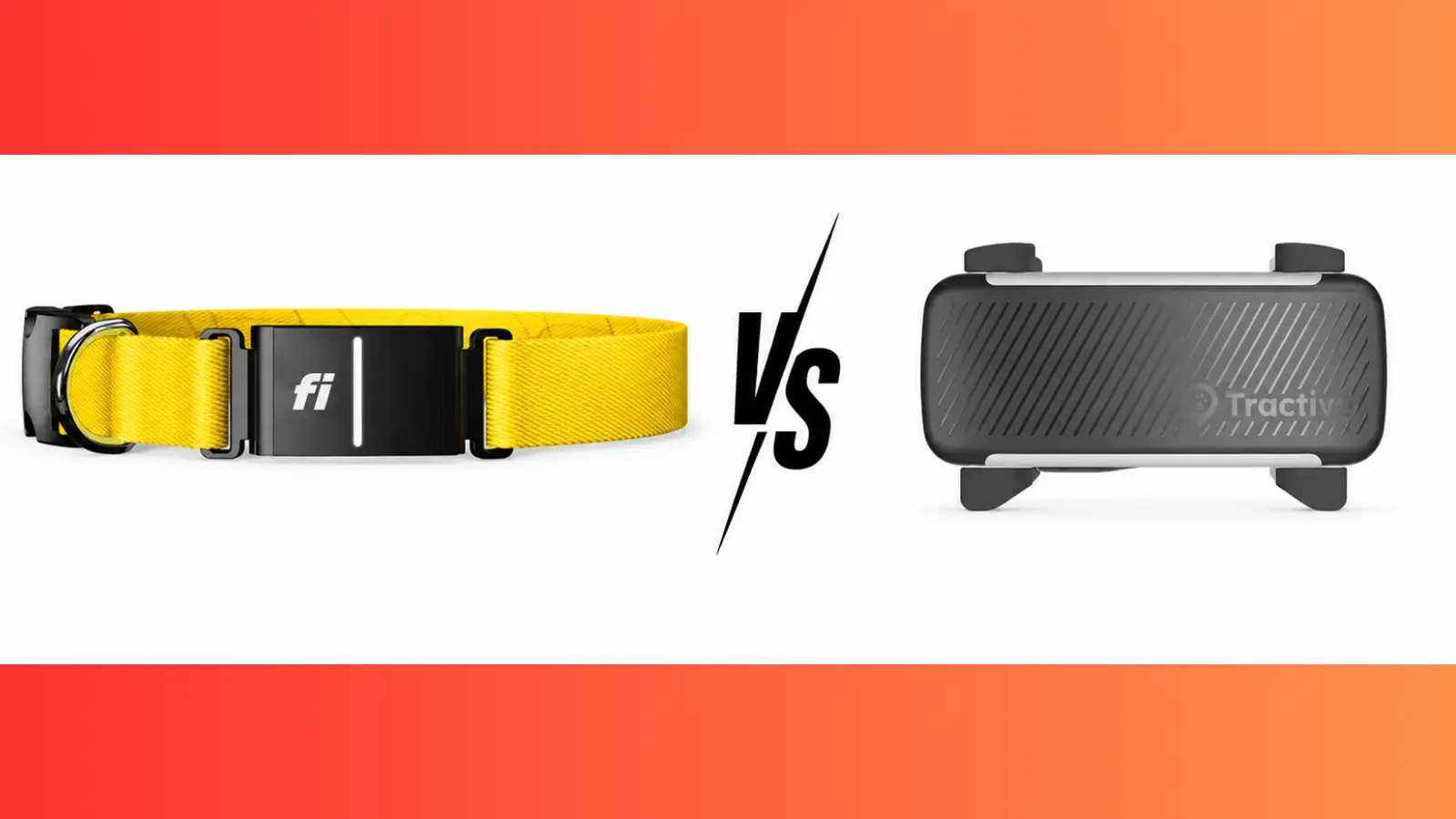
Choosing a GPS dog collar sounds simple until you starts comparing battery life, tracking speed, monthly fees, and real-world reliability. Fi and Tractive are two popular options, but they take different approaches to track your dog.
Both collars offer live GPS tracking, escape alerts, activity monitoring etc. But they differ significantly in battery performance, live tracking responsiveness, app experience, and long-term cost.
This Fi vs Tractive comparison breaks down those differences, including some others like, comfort and everyday usability, to help you choose the better GPS collar for your dog.
If you also compare Bluetooth trackers, see our guide on Fi vs AirTag for dog tracking.
Now let’s start with the short version for readers who want an answer quickly.
Fi vs Tractive: Quick Verdict
If you want a quick recommendation without digging through technical specs, here is how the Tractive vs Fi comparison breaks down:
Choose Fi if: You prioritize maximum battery life, live on a large rural property, or regularly hike in areas where battery endurance matters most.
Choose Tractive if: You want faster live tracking updates, quicker escape alerts, lower upfront costs, or broader international coverage.
Fi generally feels safer during prolonged lost-dog situations because the battery tends to last much longer in extended tracking sessions.
Tractive often feels more responsive during active searches because live location updates refresh faster.
Data sources: Official Fi product pages and Tractive Dog 6 listings (January 2026), subscription pricing listings, and long-term owner reports from Reddit, Trustpilot, and pet-technology review blogs.
| Feature | Fi Series 3+ | Tractive Dog 6 | Advantage |
|---|---|---|---|
| Best For | Long battery life, rural use | Fast updates, travel | Depends |
| Battery life (typical) | Weeks to months in home zones | About 1–2 weeks | Fi |
| Battery in escape mode | Lasts longer overall | Drains faster | Fi |
| Live tracking speed | Good, sometimes slower | Often quicker | Tractive |
| Route accuracy | Very good | Slightly sharper for many users | Tractive |
| Escape alerts | Fast and reliable | Often faster | Tractive |
| Upfront price | Higher, collar included | Lower, tracker only | Tractive |
| Subscription cost | Higher | Lower | Tractive |
| 3-year ownership cost | Higher overall | Lower overall | Tractive |
| Small-dog comfort | Slim and light | Can feel bulky | Fi |
| Collar style | Integrated | Clips on | Tractive |
| International coverage | Varies by country | Strong global reach | Tractive |
| Health tracking | Steps, rest alerts | Steps, sleep, bark tracking | Tie |
| Waterproofing | Built for outdoor use | IPX7 rated | Tie |
How We Compared Fi vs Tractive
Instead of relying on marketing claims alone, we focused on patterns that repeatedly appeared in owner feedback between 2024 and 2026.
Key comparison areas included:
GPS Accuracy: Tracking reliability during daily neighborhood walks and sudden escapes.
Alert Speed: Escape notification responsiveness and live tracking spin-up times.
Battery Drain: Real-world performance during active, high-power tracking sessions.
Dog Comfort: Form factor, weight, and fit for both small and large breeds.
Subscription Value: Total out-of-pocket costs when calculated over multiple years.
App Usability: Daily software reliability and layout navigation.
Across long-term owner discussions, the same themes appeared consistently:
- Fi is most often praised for battery life and extended escape tracking.
- Tractive is frequently highlighted for faster live updates and quicker alerts.
- Tractive users mention charging frequency more often.
- Fi users more commonly discuss slower live tracking activation.
These recurring patterns shaped the conclusions throughout this comparison.
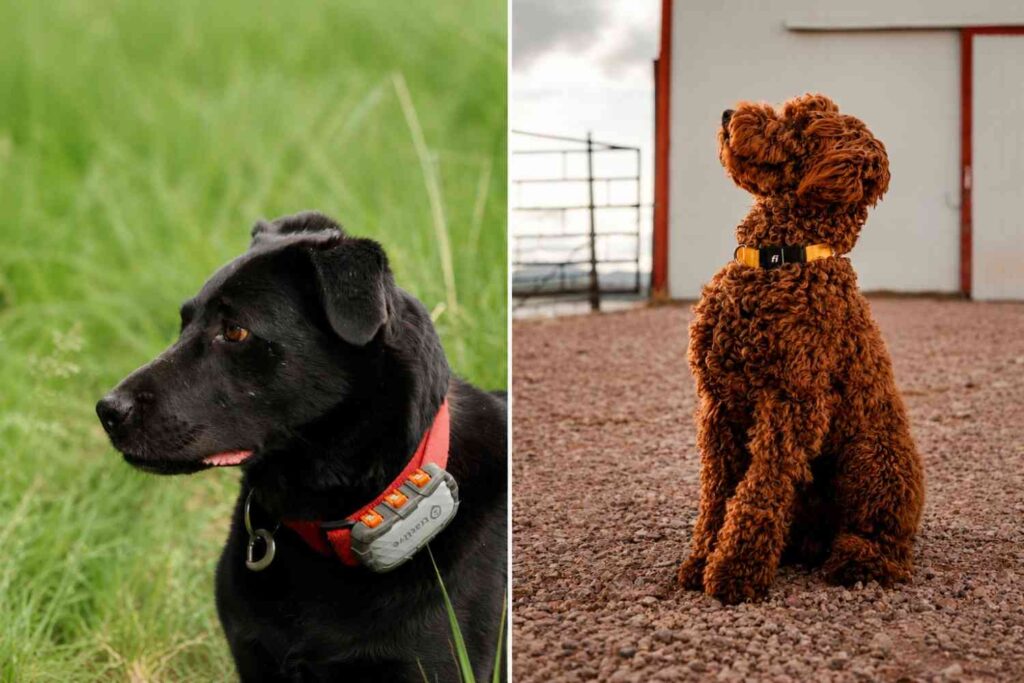
Fi Series 3 vs Tractive Dog 6
For Fi, most current comparisons revolve around the Fi Series 3+, which uses LTE-M cellular networks and is built into a dedicated collar band.
Check Price on AmazonFor Tractive, the most common reference point is the Tractive Dog 6 line, including standard, XL, and Adventure editions, which clip onto an existing collar and combine GPS with multi-carrier LTE for expanded coverage.
Check Price on AmazonBoth are designed for everyday wear and require monthly or annual plans to activate cellular tracking.
With that baseline in mind, let’s get into the part most buyers care about first.
Tractive vs Fi Accuracy in Real-World
Tracking quality is not just about seeing your dog on a map. What really matters is how quickly the collar updates, how stable the signal stays, and how reliable the tracking feels during walks or escapes.
Walk Tracking and Route Logging
Both collars track everyday walks reliably, but Tractive often produces cleaner and more precise route maps, especially in neighborhoods and parks.
Fi still performs well for casual activity tracking, though some owners notice occasional jumps or smoothed-over sections during off-leash outings.
In general:
- Tractive tends to feel slightly more precise for route mapping.
- Fi remains accurate enough for normal walks and activity history.
Live Tracking and Lost-Dog Mode
This is where differences become more noticeable.
Both collars switch into live tracking once a dog leaves a safe zone, but many owners report that Tractive activates faster and refreshes location updates more quickly during searches.
Fi’s live mode can take longer to connect. Once active, however, it usually maintains a stable signal and continues tracking reliably.
A few important real-world limitations apply to both collars:
- In dense cities or apartment buildings, neither collar is immune to interference. Tall buildings can interfere with GPS signals
- Weak cellular coverage may delay updates
- Indoor hallways and apartments can reduce accuracy
One thing to notice here is that coverage also depends heavily on local cellular partners, so performance can vary by region. This matters most for rural owners and frequent travelers.
Before buying, it’s a good idea to check Fi’s official coverage information and Tractive’s coverage and supported country details here as well.
Escape Alerts and Safe Zones
Both Fi and Tractive let you create virtual safe zones around your home or other locations.
When a dog leaves the boundary:
- Tractive usually sends alerts slightly faster
- Fi alerts are still reliable but can arrive a bit later
On return alerts, Tractive often sends a clearer “your dog is home” notification. Fi sometimes treats the return as the end of an activity session instead.
If you’re more interested in virtual fencing than GPS tracking, read our Halo Collar vs SpotOn Fence guide.
Tractive vs Fi Collar: Battery Life and Charging Reality
Battery performance is one of the biggest differences between these two brands.
Normal Daily Use
Fi: has built its reputation around long battery life. When a dog stays mostly inside safe zones and relies on Wi-Fi or low-power tracking, many owners go weeks to months between charges.
Tractive: usually lasts up to two weeks with power-saving zones enabled, or about six to fourteen days in typical use.
Heavy GPS / Escape Mode
During live tracking, both collars drain much faster.
Fi holds a stronger charge during active tracking sessions, whereas Tractive drains rapidly under extended live use.This difference is one reason hikers and rural owners often lean toward Fi.
If your dog frequently roams large properties or spends weekends on trails, battery endurance alone can push the decision in Fi’s direction.

Fi Collar vs Tractive: Which Costs More Over Time?
Neither Fi nor Tractive works without a paid plan, and those plans add up over time.
Fi Plans and Total Ownership Cost
Fi requires a membership for cellular tracking. The upfront device price is sometimes reduced during promotions, but the subscription becomes the main expense over the years.
Owners often note that Fi encourages multi-year plans to lower the monthly rate, which can help if you are confident you will stick with the brand.
Tractive Plans and Total Ownership Cost
Tractive sells its tracker separately and then adds a subscription. Over a single year, the totals can look similar to Fi, though exact numbers change with discounts.
Over two or three years, Tractive can sometimes end up slightly cheaper, depending on promotions and plan length.
When comparing value, it helps to think long-term rather than focusing only on the first checkout screen.
Looking at recent pricing patterns, Fi’s annual plans typically fall in the mid-hundreds, depending on promotions.
While Tractive’s device plus one year of service often totals less before discounts. Over three years, prepaid plans and seasonal sales can easily shift which brand ends up costing less.
Fi vs Tractive: Comfort and Collar Design
A GPS collar only works if your dog is willing to wear it all day. That makes design, attachment style, weight, and overall comfort just as important as signal strength or battery life.
Collar Design and Attachments
Fi comes built into its own collar band. That creates a clean look and keeps the device snug, but it also means you are limited to Fi-compatible collars unless you buy custom options.
Tractive attaches to almost any collar using clips or wraps. That flexibility appeals to owners who already have a favorite leather or training collar.
Small Dogs vs Large Dogs
Fi’s tracker is slim and often feels less bulky on smaller dogs.
Tractive’s device is thicker, which is rarely a problem for medium or large breeds, but can look oversized on tiny pups.
Comfort matters here because a collar that annoys a dog may end up getting taken off more often than it should.
Fi Collar vs Tractive: Health and Activity Tracking
This is where both collars offer solid but basic insights.
What Fi Tracks
Fi focuses mainly on steps, movement trends, rest time, and automated activity alerts. It does this well and adds social features that let owners compare activity levels with other dogs.
What Tractive Tracks
Tractive monitors steps, activity, sleep, and barking patterns in newer models. It flags unusual shifts and provides basic wellness trends.
It is best to treat either system’s health data as an early warning tool rather than a diagnosis.
If you’re specifically looking for deeper wellness tracking, we’ve also covered the PetPace Smart Collar Review, which focuses heavily on health monitoring and behavioral analysis.

App Experience and Reliability
Because these collars rely so heavily on smartphone apps, the software side of the experience deserves just as much attention as the hardware.
Ease of Use
Both apps are easy to set up and walk you through creating a pet profile, adding safe zones, and viewing activity history.
Fi leans into community features and leaderboards.
Tractive’s app feels more GPS-focused, with intuitive maps and quick status updates.
Notifications and Sync Issues
Tractive’s notifications about leaving home are usually fast.
Fi sends reliable status updates, though some users experience occasional delays in syncing activity data.
Neither app is flawless, but both receive frequent updates.
Tractive vs Fi: Pros and Cons
Fi’s strengths tend to be long battery life, clean design, and dependable escape tracking in extended use. Its downsides include slower live connection times and reliance on proprietary collars.
Tractive shines with faster live tracking, flexible attachment options, and broader coverage. Its main drawbacks are shorter battery life and a bulkier form factor for small dogs.
Final Recommendation for 2026
If we compare Fi vs Tractive, both solve the same core problem: helping you find your dog quickly when it matters most. Neither is perfect, and the better choice depends on how your dog lives day to day.
If your weekends involve hiking trails and wide open spaces, Fi’s battery life may give you more peace of mind.
If you travel often or need rapid location pings, Tractive can feel like a smarter companion.
In the end, the best GPS collar is the one you actually keep charged, attached, and checked regularly.
Frequently Asked Questions
Is Fi More Accurate Than Tractive?
Tractive’s route logging often looks slightly cleaner for live updates, though both are capable of finding a lost dog reliably.
Which Has Better Battery Life, Fi or Tractive?
Fi clearly lasts longer between charges. Especially when dogs stay within safe zones or during prolonged tracking sessions.
Do Fi & Tractive Work Without Wi-Fi?
Yes. Both rely on cellular networks when away from home.
Fi vs Tractive: Which GPS Dog Collar Is Better?
Fi is usually better for owners who prioritize long battery life and extended tracking sessions, while Tractive is often preferred for faster live updates and quicker escape alerts.
Tractive vs Fi Collar: Which Is Better for Small Dogs?
Fi’s slimmer integrated collar design is usually more comfortable for smaller dogs, while Tractive can feel bulkier on tiny breeds.
Featured Image Source: Fi & Tractive Product Pages
The Smart Pet Gears Team (Team SPG) is a group of pet care researchers, product analysts, and writers dedicated to helping dog owners make informed decisions about smart collars, GPS trackers, and pet technology.
Our articles are based on manufacturer documentation, veterinary guidelines, testing insights, and independent analysis to ensure accuracy and transparency.