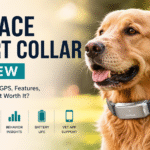
Most dog GPS trackers answer only one question: “Where is my dog right now?”
The FitBark GPS Dog Tracker tries to answer something bigger.
It tracks location, activity, sleep patterns, and behavioral changes in a single device small enough for everyday wear. In many ways, it feels closer to a fitness wearable for dogs than a traditional GPS tracker.
But the experience is not perfect. The subscription cost, charging routine, and unusual zip-tie attachment system can quickly become frustrating depending on how you plan to use it.
At the same time, many owners end up loving the amount of health data the device provides once they start using it daily.
And then there’s the confusion between FitBark GPS and FitBark 2, two products that look similar but work very differently.
In this review, we’ll break down:
- how accurate the FitBark GPS really is
- whether the battery life is practical
- how it compares to FitBark 2
- what the subscription actually gives you
FitBark 2 vs. FitBark GPS: Core Differences
A lot of buyers get confused between FitBark 2 and FitBark GPS because both products look somewhat similar and use the same app ecosystem.
But internally, they are completely different devices. The confusion is understandable because both products share the same app ecosystem, but they target very different types of dog owners.
The biggest difference between the non-GPS version and the GPS version is that they target completely different use cases.
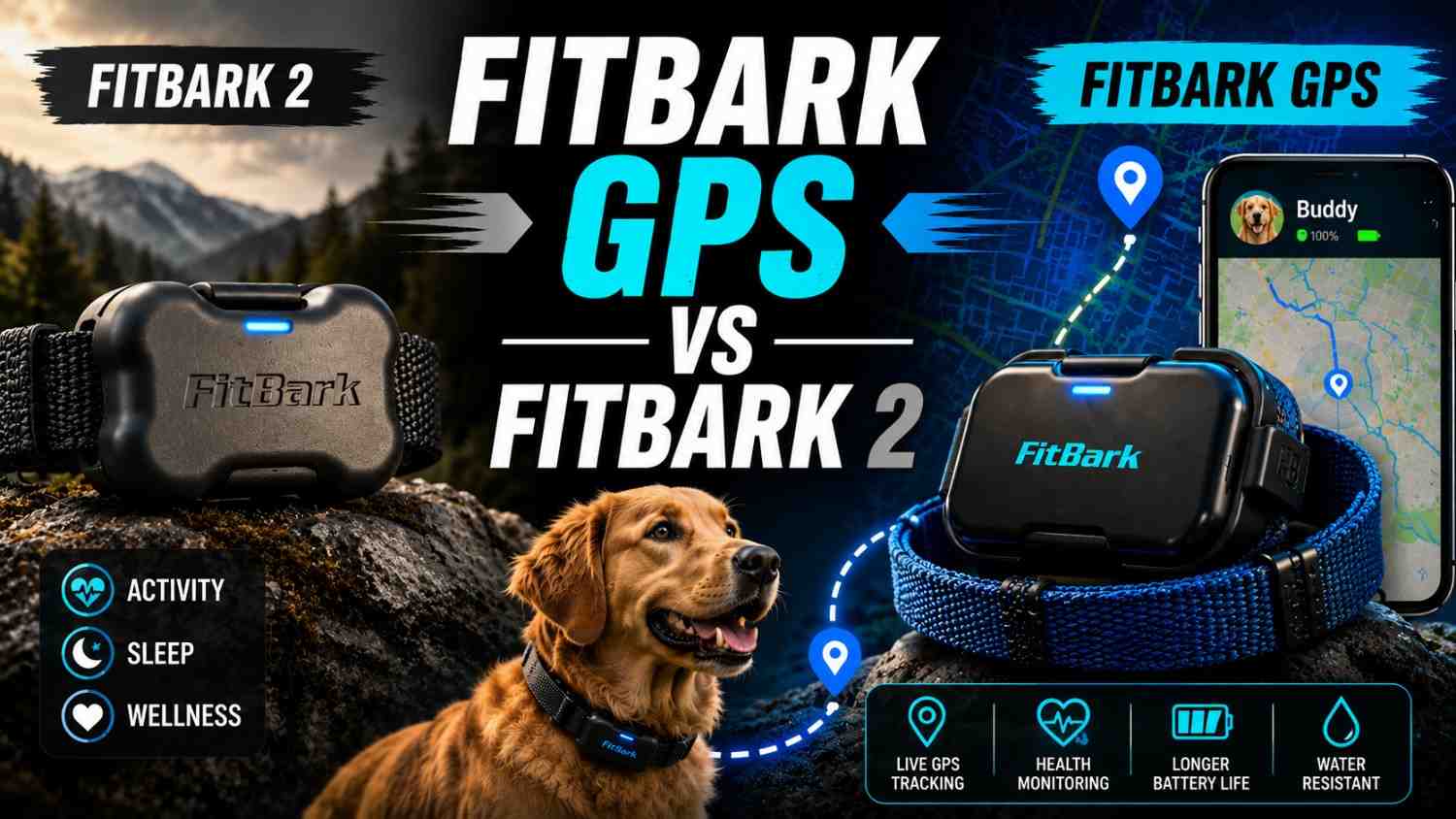
The older FitBark 2 focuses mainly on activity, sleep, and wellness monitoring, while the newer FitBark GPS version adds real-time location tracking, escape alerts, and LTE connectivity for live monitoring.
Here’s the practical difference:
| Feature | FitBark 2 | FitBark GPS |
|---|---|---|
| GPS Tracking | No | Yes |
| Live Location | No | Yes |
| Subscription Required | No | Yes |
| Health Tracking | Yes | Yes |
| Sleep Monitoring | Yes | Yes |
| Battery Life | Much Longer | Shorter |
| Escape Alerts | No | Yes |
| Cellular Connectivity | No | Yes |
If your dog rarely leaves home and you mainly care about fitness tracking, non-GPS older version may be enough.
If your dog frequently escapes, spends a lot of time outdoors, hikes off leash, or tends to wander due to anxiety-related behavior, the GPS version becomes far more useful than a standard activity tracker.
Compared to systems like the Fi Smart Dog Collar it also puts more emphasis on wellness tracking alongside location monitoring.
Key Features of FitBark GPS
The biggest reason the GPS version stands out in the crowded pet tracker market is that it tries to do two jobs at once:
- GPS tracking
- canine health monitoring
Some trackers do one of these well. Few attempt both.
Real-Time GPS Tracking
The core selling point of the FitBark GPS Tracker is obviously live location tracking.
Using LTE connectivity and GPS positioning, the tracker can show your dog’s current location, provide escape alerts, create safe zones and display movement history.
The 2nd Gen model uses a tri-carrier LTE-M network (switching seamlessly between AT&T, Verizon, and T-Mobile).
The app updates location fairly quickly during active tracking mode, though update speed may vary.
Unlike short-range Bluetooth trackers, this device is designed for long-distance tracking as long as LTE coverage exists.
Health & Activity Monitoring
This is where FitBark separates itself from many GPS-only competitors.
The tracker monitors activity levels, sleep quality, calories burned, rest cycles and mobility changes.
Over time, the app builds behavior trends. That can help owners notice:
- sudden inactivity
- recovery after surgery
- anxiety spikes
- aging-related mobility decline
- abnormal sleep patterns
Many owners of senior dogs appreciate this aspect more than the GPS itself.
For example:
- A dog becoming less active over several weeks may indicate joint discomfort
- Increased nighttime movement may point to stress or pain
- Sudden drops in daily activity can sometimes signal illness
This is the area where FitBark feels more refined than many budget GPS trackers that focus almost entirely on location tracking.
Sleep Tracking
Sleep tracking is one of the stronger wellness features of the device. The app monitors resting patterns, nighttime movement, and overall sleep consistency over time.
While it is not a medical tool, the data can still help owners notice routine changes in senior dogs, anxious pets, or dogs recovering from health issues.
Multi-Person Access
The app also supports shared caregiver access, allowing family members, pet sitters, or dog walkers to monitor the dog’s location, activity, and alerts when needed. It’s a small feature, but genuinely useful in multi-person households.
Water Resistance
The device is built for outdoor use. It is waterproof and handles everyday outdoor use well, including rain, mud, and swimming sessions.
Apple Watch & Fitbit Integration
The app ecosystem also supports integrations like the Apple Watch app and Fitbit Clock Face, allowing owners to quickly check activity stats, wellness updates, and location information directly from their wrist.
It’s a small feature, but one that makes the tracking experience feel more connected during daily use.
FitBark GPS Design & Collar Attachment Experience
One of the most debated aspects of this smart collar is its attachment system.
Instead of using a fully integrated smart collar design, the tracker attaches to an existing collar using:
- zip ties
- mounting loops
Reactions to the attachment system are surprisingly mixed. Some owners get used to it quickly, while others find it annoying every time the device needs charging.
The reason this matters is because practicality matters more than specifications during daily use.
Pro Tip : Owners keep a small pack of 4-inch black nylon zip-ties in their dog’s grooming kit or drawer so they don’t feel stranded when they inevitably have to cut them off to change collars.
The Good Side of the Design
The compact size is genuinely impressive.
It is lightweight and relatively small. Which makes it comfortable for smaller breeds and less bulky than many GPS collars
That makes it comfortable for terriers and toy breeds. Many competing GPS collars are too heavy for smaller pets.
The Annoying Side
The zip-tie mounting system creates several frustrations:
- removing the device for charging takes extra effort
- switching collars is inconvenient
- improper attachment may cause slight movement
- some owners dislike the DIY appearance
It is not necessarily a deal-breaker.
But it definitely feels less polished compared to integrated smart collars and premium GPS collar systems
If you frequently rotate collars, this setup may become annoying over time.
Practical Reality
In everyday use, most owners eventually get used to the attachment system. Still, the initial setup can feel awkward, especially while adjusting placement for comfort and stability.
Subscription Costs & Value Breakdown
The GPS feature requires an ongoing subscription for GPS functionality. Without it, live tracking features will not work properly.
That subscription covers:
- LTE connectivity
- location tracking
- app services
- geofence alerts
Why the Subscription Exists
Unlike Bluetooth trackers, GPS devices need cellular communication to send live location data.
That means recurring operational costs which is normal across most GPS dog trackers.
Is It Worth It?
That depends entirely on your priorities. The FitBark GPS makes the most sense for:
- owners of escape-prone dogs
- outdoor adventurers
- people in large rural properties
- dogs with medical monitoring needs
If your dog:
- rarely leaves indoors
- stays leashed constantly
- never escapes
- only needs fitness tracking
then the non-GPS version may provide better value because it avoids recurring costs.
Battery Life and Charging
Battery life is one of the most searched topics related to this tracker, and for good reason.
GPS tracking drains batteries much faster than simple activity tracking. Battery performance is decent overall, though it is clearly not designed for “charge once and forget it” usage.
This is where the difference between FitBark GPS and FitBark 2 becomes very noticeable.
FitBark GPS Battery Performance
Battery duration depends heavily on GPS tracking, activity levels and live tracking usage.
Under moderate use, many owners report needing to charge the device every few weeks.
However:
- frequent live tracking drains battery faster
- poor cellular signal increases power consumption
- constant movement can shorten runtime
During active lost-dog tracking situations, battery drain becomes significantly faster.
That is normal for virtually all LTE GPS trackers.
FitBark 2 Battery Advantage
The FitBark 2 has a major advantage here. Since it lacks GPS and LTE functions, its battery can last substantially longer.
Less charging often means:
- fewer interruptions
- less maintenance
- better long-term usability
How Accurate Is FitBark GPS Dog Tracker?
Accuracy is one of the most important aspects of any GPS tracker.
Fortunately, the tracker generally performs well under normal conditions.
Real-World Tracking Accuracy
In open areas, the FitBark GPS Dog Tracker generally maintains stable location tracking with fairly consistent updates and responsive geofence notifications.
For everyday use in suburban or urban settings, the accuracy is usually sufficient for keeping track of walks, monitoring outdoor movement, and locating dogs that manage to slip out of the yard.
Factors That Affect Accuracy
Like most GPS dog trackers, the FitBark GPS performs best in open areas with stable LTE coverage.
Dense forests, heavy urban structures, underground spaces, or weaker cellular signals can sometimes slow location updates slightly.
Compared to Other GPS Dog Trackers
Compared to some competitors, FitBark GPS focuses more on balancing:
- wellness tracking
- lightweight design
- everyday usability
Instead of trying to become a hardcore outdoor tracking system, FitBark leans more toward everyday pet wellness and routine monitoring.
But for average pet owners, the accuracy is generally more than sufficient. Hunters or backcountry users may still prefer specialized systems like Garmin.
Pros and Cons
No tracker is perfect, and the tracker definitely has both strengths and weaknesses.
| Pros | Cons |
|---|---|
| Combines GPS and health tracking | Requires a monthly subscription |
| Lightweight and small-dog friendly | Battery drains faster during live tracking |
| Detailed sleep and activity insights | Zip-tie attachment feels awkward |
| Reliable escape and safe-zone alerts | Needs more frequent charging than FitBark 2 |
| Waterproof for outdoor use | LTE signal affects tracking performance |
| Supports multiple caregivers in the app | Not ideal for remote wilderness use |
Who Should Buy FitBark GPS?
The FitBark Tracker works best for specific types of owners.
Ideal Buyers
Owners of Escape-Prone Dogs
If your dog:
- jumps fences
- slips collars
- bolts during walks
- wanders outdoors
GPS tracking becomes extremely valuable.
Senior Dog Owners
The health monitoring side of FitBark can help track:
- declining mobility
- changing sleep patterns
- activity reduction
This makes long-term wellness monitoring easier.
Active Outdoor Owners
The tracker also makes more sense for active outdoor owners who regularly take their dogs hiking, camping, or on long trail trips.
Data-Oriented Pet Owners
Some owners genuinely enjoy tracking:
- sleep quality
- activity trends
- calorie estimates
- daily exercise goals
The FitBark GPS provides a lot of behavioral data for that audience.
Who Should Avoid It?
Despite its strengths, this tracker is not for everyone.
People Who Hate Subscriptions
If recurring monthly costs annoy you, the GPS model may become frustrating long term.
In that case FitBark 2, Bluetooth trackers and non-cellular devices might feel more practical.
Owners Needing Ultra-Long Battery Life
If you want:
- several months of battery
- minimal charging
- basic activity monitoring only
then FitBark 2 is usually the better fit.
Hardcore Wilderness Users
For:
- hunting dogs
- remote mountain use
- off-grid tracking
specialized systems with dedicated transmitters may be a better choice
Final Verdict
The FitBark GPS Dog Tracker stands out because it combines location tracking with detailed health and activity monitoring in a fairly compact device.
Instead of focusing only on GPS, it also gives owners useful insights into sleep patterns, daily activity, and long-term behavior trends.
Its strongest points are the lightweight design, wellness-focused app experience, and reliable escape alerts. On the downside, the subscription cost, more frequent charging, and zip-tie attachment system may not appeal to everyone.
Overall, the this gps dog tracker makes the most sense for owners who want both safety tracking and health monitoring in a single device. If GPS tracking is not important to you, the older FitBark 2 may still be the better value option.
Frequently Asked Questions:
Does FitBark GPS require a subscription?
Yes. The GPS features rely on LTE cellular connectivity, so a subscription is required for live tracking and alerts.
What is the difference between FitBark 2 and FitBark GPS?
The main difference is GPS tracking. FitBark 2 focuses on activity and health monitoring, while GPS version adds real-time location tracking and escape alerts.
Is FitBark GPS accurate?
In most suburban and urban environments, the GPS Dog Tracker provides reliable tracking accuracy suitable for locating escaped pets and monitoring outdoor activity.
Is FitBark 2 better than FitBark GPS?
That depends on your needs. If you only want health and activity monitoring with longer battery life, FitBark 2 may be better. If you also need real-time location tracking, FitBark GPS is the stronger choice.
Is FitBark GPS waterproof?
Yes. The tracker is designed for outdoor use and can handle rain, mud, splashing, and swimming.
The Smart Pet Gears Team (Team SPG) is a group of pet care researchers, product analysts, and writers dedicated to helping dog owners make informed decisions about smart collars, GPS trackers, and pet technology.
Our articles are based on manufacturer documentation, veterinary guidelines, testing insights, and independent analysis to ensure accuracy and transparency.