A $29 AirTag works for keys and wallets—but what happens when your dog panics and runs? Many owners don’t realize why this difference matters until it’s too late. Tracking a dog is nothing like tracking an object.
A dog can run, hide, panic, sprint across open fields, slip between streets, or disappear into areas where no people—and no iPhones—are around to help.
And in those critical moments, the difference between a key finder and a dedicated GPS collar becomes more than just technology or price; it becomes a matter of how quickly and reliably you can get your dog back.
This article breaks down the Airtag vs GPS Dog Collar difference with clarity, real-world scenarios, and practical guidance so you can make the safest choice for your dog.
Why People Get Confused About AirTags vs GPS Collars
Dog tracking tools used to be rare. Now, they’re everywhere. With more dogs exploring the outdoors, growing concerns around pet theft, and owners paying closer attention to safety, tracking has become part of everyday pet care.
Naturally, many owners are also searching for solutions that are effective without being costly.
Dog owners are increasingly searching for clear answers about whether AirTags can actually be used to track pets. They want to know whether the same tech used for keys and wallets can really help when a living animal—who can run, hide, panic, and climb—goes missing.
It’s completely understandable. A $29 option is tempting. But the real question is whether it works when you actually need it.
How an AirTag Tracks Your Dog (Strengths and Limitations You Should Know)
Apple didn’t build the AirTag for pet safety. But dog parents began using it anyway because of its simplicity and price. To understand whether you can rely on it, you have to know how it tracks.
The Technology Behind AirTag Location Tracking
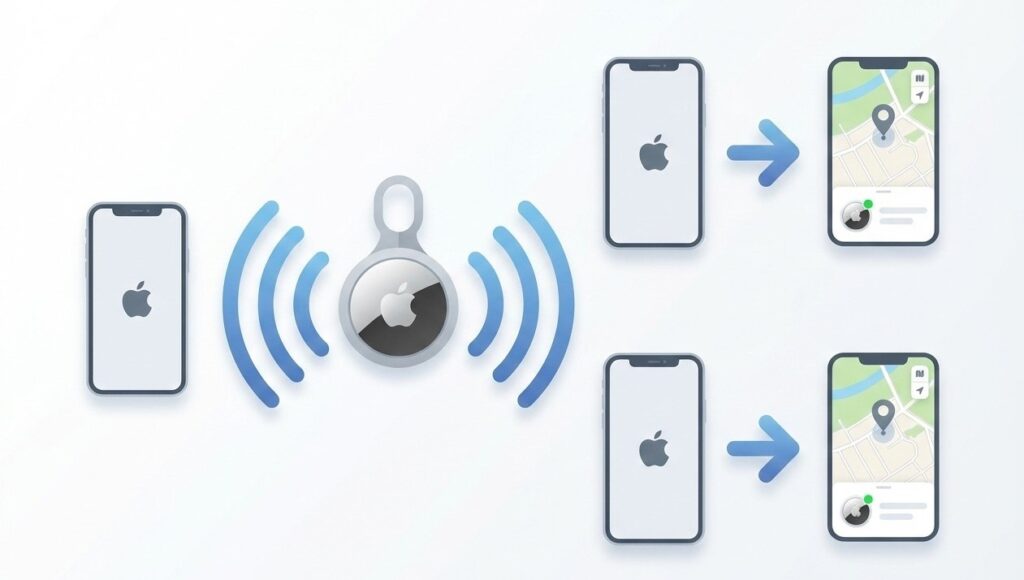
An AirTag doesn’t connect to satellites, and it doesn’t send live location updates. Instead, it quietly pings nearby iPhones, which then send the tag’s location to your “Find My” app.
This means an AirTag is only as good as the number of iPhones in your area, the distance between those iPhones and the AirTag, and whether your dog is moving or still.
Where AirTags perform well
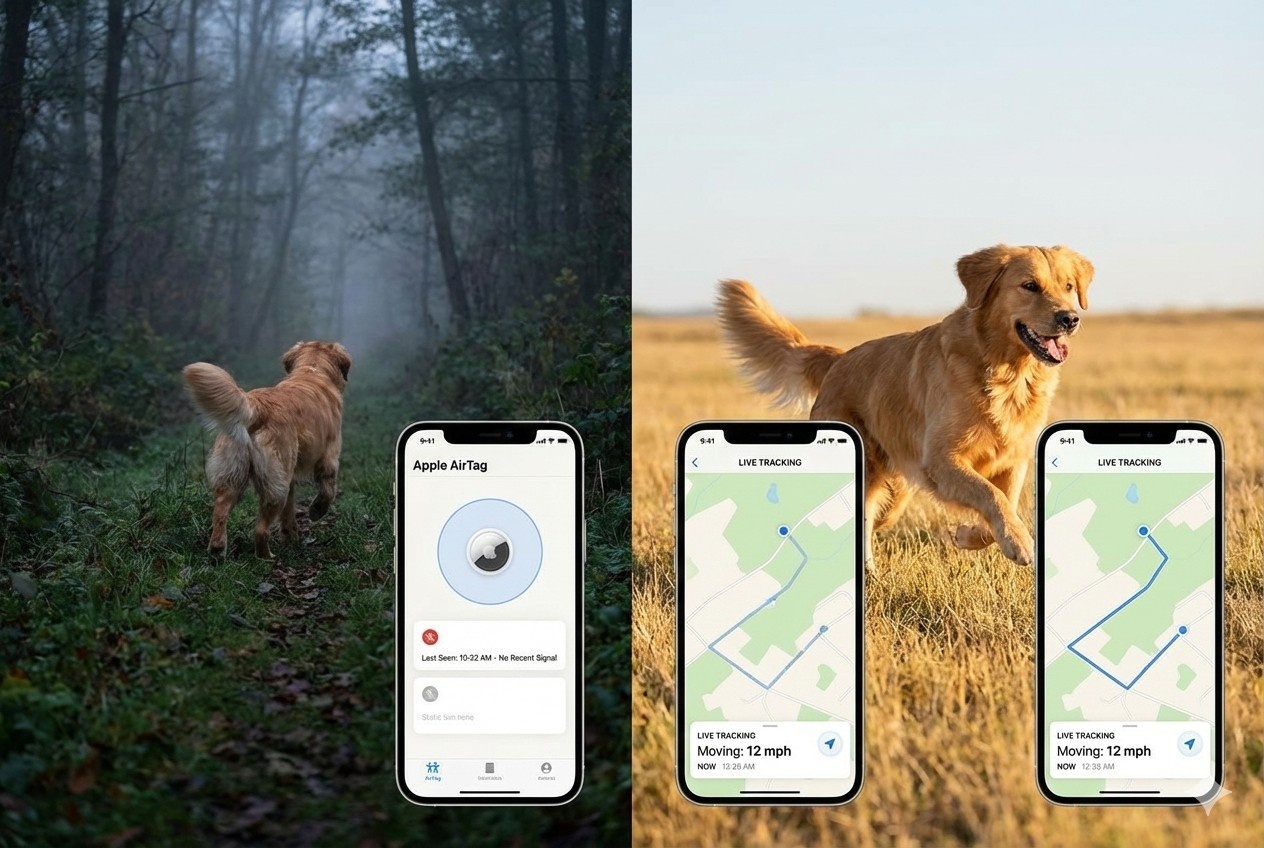
AirTags work beautifully in busy cities, apartment buildings, shopping areas, and parks where people carry iPhones. Even if your dog strays a little, the AirTag updates are frequent enough to give you a sense of direction.
Where AirTags struggle
This is where concerns begin. Open fields, rural areas, farms, the outskirts of towns, streets with few people, forest trails, and any place with low iPhone density all create major issues. If no nearby iPhone detects your dog’s AirTag, you get no updated location.
This gap can last minutes—or hours—during which you have no idea where your dog has gone next. That delay can be dangerous because dogs don’t wait. They keep moving.
What Makes a GPS Dog Collar Different (And Why It Costs More)
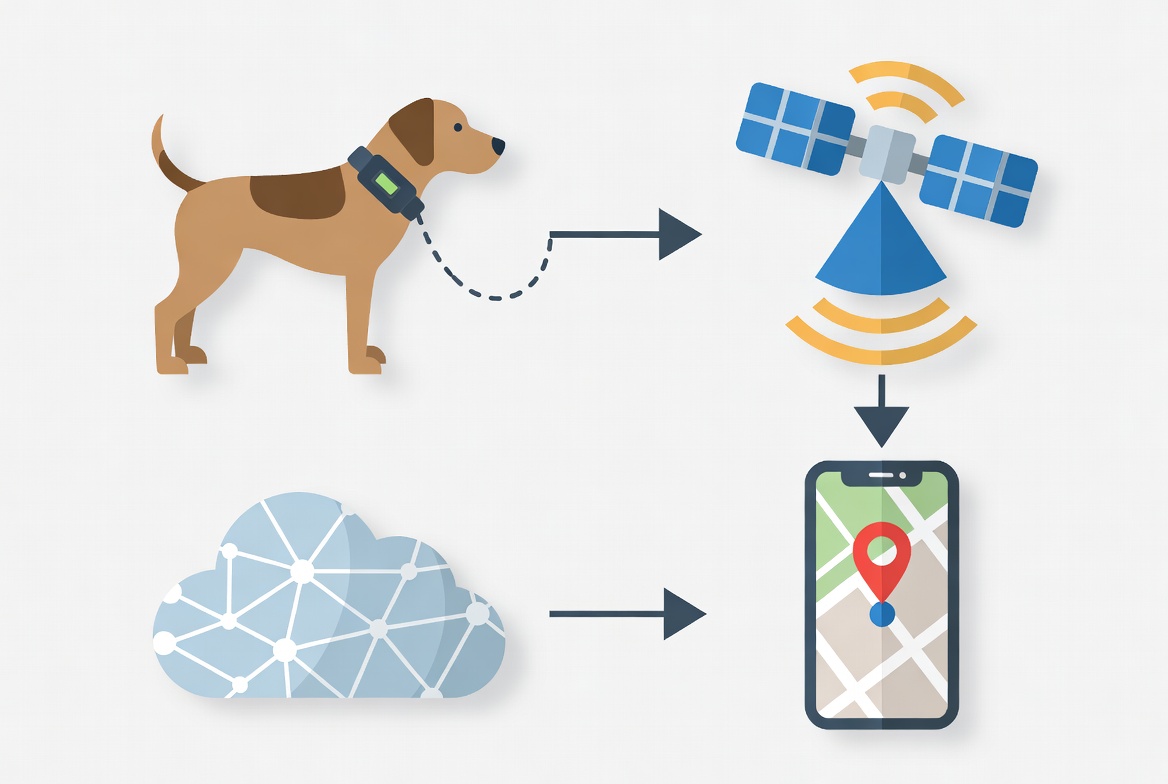
If AirTags rely on other devices, GPS dog collars rely on something far more powerful: satellites and cellular networks. GPS collars are built specifically for animals, which gives them several advantages.
Live movement tracking
A GPS collar can show you where your dog is in real time. If your dog is running, you will see it. If your dog stops, you’ll know. This alone can be the difference between a quick recovery and hours of panic.
Escape alerts
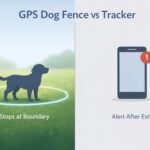
Many GPS collars send an instant notification the moment your dog leaves your yard or breaks out of a virtual boundary. This allows you to react before your dog gets too far.
Rural-friendly tracking
Unlike AirTags, GPS collars do not depend on nearby devices. As long as the collar has cellular coverage, you can track your dog almost anywhere.
Why do they cost more
GPS collars require ongoing network connections, servers, and live data updates; hence, they require a monthly subscription. It’s not “extra fees for no reason”; it’s the cost of real-time reliability.
Real-World Performance: AirTag vs GPS Dog Collar When Your Dog Goes Missing
Let’s walk through actual lost-dog scenarios.
1. Your dog runs out of your house after a loud noise
An AirTag likely gives delayed updates unless strangers’ phones detect it, while a GPS collar sends immediate movement updates showing the direction your dog is running.
2. Your dog wanders far into an empty street or open land
An AirTag may go completely silent, while a GPS collar continues tracking as long as it receives cellular signals.
3. Your dog gets lost in the woods or on a trail
An AirTag is not dependable because there are no people and no iPhones. A GPS collar usually works if the area has basic mobile coverage.
4. Dog theft
Thieves often check for AirTags because of Apple’s anti-stalking alerts. An AirTag can notify the thief, who may remove it, while a GPS collar is silent, discreet, and harder to detect.
Overall, the difference becomes clear: AirTags help when your dog is near people; GPS collars help when your dog is not.
Safety Considerations You Should Not Ignore
AirTag concerns
AirTags pose a potential choking hazard for dogs, especially smaller breeds or puppies. If the AirTag is not securely attached in a proper protective case, it could become dislodged or swallowed during play or chewing, creating a risk of choking or internal injury.
Also, they offer no dedicated features for escape prevention and provide no live tracking during emergencies.
GPS collar concerns
GPS collars are heavier for very small dogs and need to be charged more often. They come with a subscription cost and may have issues in rare network blackouts.
Both tools have limitations, but one offers real-time tracking, and the other offers occasional location updates. That’s the core difference.
Battery Life Matters: AirTag vs GPS Collar During Emergencies
Battery life becomes critical when your dog is missing.
AirTag
An AirTag lasts months, but it offers no live tracking and has a slow refresh rate. This long battery life is helpful only if the tag is able to send location pings consistently.
GPS Collar
A GPS collar’s battery depends on the settings. Real-time tracking drains fastest, while power-saving mode lasts longer. Most collars require charging every one to five days.
Battery drains faster because it is doing far more work—sending live updates, pings, and data continuously. When your dog is lost for hours, a GPS collar gives you the best chance at finding them quickly.
Range and Coverage Differences That Impact Your Dog’s Safety
AirTag’s range depends on people, not distance
No people means no updates. If your dog runs into an empty zone, the AirTag stops sending useful data.
GPS collars rely on mobile networks
If the collar receives cellular signals—no matter how few people are around—you can track your dog accurately. This makes GPS collars far more dependable in countryside areas, farm zones, mountain trails, beaches, and poorly populated regions.
If you live somewhere with low network coverage, choosing the right GPS brand also matters.
Everyday Comfort: AirTag Holders vs GPS Collar Fit and Usability
Comfort is important because your dog will wear the device daily.
AirTag comfort
AirTags are light and barely noticeable. Many holders are silicone-based and require a secure attachment to avoid falling out. Some holders are chewable, which may pose a problem for playful dogs.
GPS collar comfort
GPS collars are slightly heavier but come in different sizes, with more secure designs. They are often water-resistant or waterproof and made specifically for active play. Small dogs may prefer the AirTag’s lightweight, but medium and large breeds handle GPS collars comfortably.
Cost Comparison: AirTag vs GPS Collar
AirTag
An AirTag requires a one-time purchase of around $29. You may also invest in an optional holder, and there are no subscription fees. However, functionality is limited.
GPS collar
A GPS collar involves a device cost that may range from $70 to $300 and a subscription for live tracking and premium features like escape alerts. When choosing, consider the real cost of losing your dog, including search time, shelter fees, transport, safety risks, and emotional stress.
The subscription becomes a small price for peace of mind when your dog’s safety is at stake.
When an AirTag Works Well Enough
AirTags can be sufficient if you live in a dense urban area and your dog rarely goes off-leash. They work for dogs with calm, low-risk personalities, and they serve well as basic identification tags.
They also work as backup trackers rather than primary ones. For apartment dogs and extremely predictable routines, AirTags offer decent peace of mind.
When You Should Choose a GPS Dog Collar Instead
A GPS collar is ideal if your dog escapes frequently, has high energy, or runs fast. It is also better for dogs living near open fields, farms, or village areas, as well as those that go hiking or on long outdoor walks.
A GPS collar is useful if your dog spends time with walkers or sitters or if the breed has a strong prey drive. This category covers most dogs. If safety is a priority, a GPS collar is the more reliable choice.
Insights From Vets and Trainers
Veterinarians consistently emphasize reliability over price when it comes to pet safety. Having treated injured dogs found hours after escaping, many vets recommend GPS collars for dogs with behavioral tendencies such as:
Chasing behavior, fear of loud sounds, separation anxiety, or low recall response.
Trainers also view GPS collars as part of a broader safety plan. They stress that no tracker replaces recall training, boundary training, or proper fencing. When things go wrong, however, a tracker becomes your first line of defense.
Real Pet Parent Stories: When Trackers Made a Difference
When AirTags helped
Owners in big cities often share that AirTags helped them locate their dogs in parks, apartment basements, and busy streets where multiple iPhones were nearby.
When AirTags failed
Several rural owners report that their AirTag stopped updating once their dog left the main road. It became useless until someone with an iPhone walked nearby, which sometimes took hours.
GPS collar success stories
Owners have retrieved lost dogs from forest trails, during storms, after jumping over backyard fences, from highways, and even after being stolen. The pattern is clear—GPS collars excel where AirTags simply cannot operate.
Practical Guidance: Which Tracker Should You Buy?
Use this simple framework.
Choose an AirTag if:
Your dog is always with you, you live in a high-traffic, high-iPhone-density area, you want a cheap backup tracker, and you only need basic “last known location” clues.
Choose a GPS collar if:
Your dog is energetic, curious, nervous, or unpredictable. You live in a place with open space, your dog goes off-leash, you want fast recovery in emergencies, and you cannot risk delays.
Best approach?
Many pet owners actually use both. The AirTag works for identification, while the GPS collar provides real safety.
Final Verdict: Is the $29 AirTag Enough?
An AirTag is a convenient and affordable tracking option, but it relies on nearby Apple devices and is not built for continuous, real-time location monitoring.
A dedicated GPS dog collar is designed specifically for live tracking and wider coverage, particularly in situations where immediate location data matters.
The right choice depends on your dog’s behavior and environment. For predictable indoor dogs in dense urban areas, an AirTag may function as a supplementary tracker. For active dogs that roam farther or spend time outdoors, a GPS collar provides more consistent tracking capability.
Ultimately, the decision is less about price and more about reliability. Consider how quickly you would need location updates if your dog disappeared — and choose the system that aligns with that level of response.
What matters most to you when choosing a tracker: upfront cost, network coverage, or tracking consistency?
Frequently Asked Questions
Can an AirTag replace a GPS dog collar?
No. It can complement one, but it can’t perform the same real-time tracking functions.
Does AirTag show live location?
Yes. But it only shows the location when another iPhone detects it.
Can I use both AirTag and GPS together?
Yes—this gives you a backup in case one fails.

The Smart Pet Gears Team (Team SPG) is a group of pet care researchers, product analysts, and writers dedicated to helping dog owners make informed decisions about smart collars, GPS trackers, and pet technology.
Our articles are based on manufacturer documentation, veterinary guidelines, testing insights, and independent analysis to ensure accuracy and transparency.