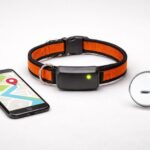
You just spent $200 on a sleek smart collar and another $100 on a yearly subscription. You’re standing at the trailhead, looking at your dog, feeling a wave of relief. “If he bolts,” you think, “I’ll just pull up the app and find him.”
This is the “Peace of Mind” trap.
Most dog owners significantly overestimate how their trackers work. They treat a GPS collar like a magical invisible tether.
But as thousands of users have learned the hard way—usually in the middle of a dark forest— these devices are not foolproof. They are highly sensitive radio and cellular computers that fail exactly when you need them most.
So, are GPS dog trackers reliable once you leave neighborhoods and step outside?
In this article, we’re going to strip away the marketing fluff and look at the technical reality of GPS reliability for outdoor adventures.
The “No Service” Trap: Why Your Tracker is Actually a Cell Phone
The biggest misconception is that “GPS” means the collar communicates directly with your phone. It doesn’t. Most popular trackers (Fi Series 3, Tractive, Whistle) work in two distinct stages:
- The GPS Stage: The collar listens for signals from satellites to determine its own location.
- The Cellular Stage: The collar then uses a cellular network (LTE-M) to send that location data to the manufacturer’s server, which then sends it to your phone.
The Failure Point: If you are hiking in a “dead zone” where your phone has no bars, the collar can’t send you the data. It knows exactly where the dog is, but it has no way to tell you.
On Reddit, users in rural areas frequently report that their “unlimited range” trackers became expensive plastic weights the moment they crossed a ridge.
The Satellite Alternative (Why Some Trackers Avoid This Problem Entirely)
If you are a serious backcountry hiker, you shouldn’t be looking at cellular trackers. You need VHF (Very High Frequency) or Satellite-to-Satellite systems like the Garmin Alpha T20. These don’t need cell towers; they communicate directly to a handheld device.
If you are deciding between cellular and satellite-based options, our GPS tracker buying guide breaks down which type makes sense for different terrains, budgets, and use cases
The Cellular Coverage: The Limitation Most Owners Overlook
One of the biggest misunderstandings around GPS dog trackers is assuming that GPS alone is enough. In reality, GPS and cellular connectivity play very different roles. GPS determines location, but cellular networks are what deliver that location to your phone.
GPS Can Know, But Cannot tell
Your dog’s collar may still be calculating its position accurately even when you stop receiving updates. Without a cellular signal, that information stays stored locally on the device.
This is why some owners regain signal later and suddenly see multiple delayed location points appear at once.
Why Coverage Maps Don’t Tell the Full Story
Coverage maps are static estimates. Real-world conditions are dynamic. Terrain elevation, tree density, weather, and network congestion all affect performance.
A trail marked as “covered” can still produce gaps, especially in valleys or heavily wooded sections. This explains why reliability feels inconsistent even within the same hike.
What to Do When the App Says ‘No Signal’ While Your Dog is Missing
“No Signal” screen during a search is a unique kind of panic, but it isn’t a dead end. Usually, it means your dog is in a “signal shadow“—a ravine, thicket, or metal structure. When the tech fails, switch to these professional recovery tactics immediately.
1. The 10-Minute “Anchor” Rule.
Don’t panic-run. GPS and cellular handoffs often experience temporary blackouts as a dog moves between towers or satellite clusters. Stay at the Last Known Position (LKP) for 10 minutes to allow the hardware to “handshake” with the network again.
2. Switch to “Bluetooth Geiger Counter” Mode.
Your collar has a short-range Bluetooth radio that bypasses cellular towers. Open your app’s “Radar” or “Find My” mode. Walk in a slow, expanding spiral from the LKP. If the signal strength meter rises, your dog is likely hunkered down within 30–50 feet.
3. Deploy a “Scent Anchor.”
Dogs in survival mode rely 100% on their nose. Leave a heavily scented, unwashed item of your clothing (like a gym shirt) and your dog’s bed at the LKP. Avoid leaving food, which attracts predators that may scare your dog away.
4. The Digital Dragnet
Immediately post to Next door and local Facebook Lost & Found groups. Contact the three nearest shelters; strangers often mistake smart collars for training collars and may not realize the dog is being actively tracked
Are GPS Dog Trackers Reliable in Forests, Trails, and Open Areas?
Short answer: yes—but not equally everywhere. Let’s understand with these examples.
The Three “Real-World” Personas
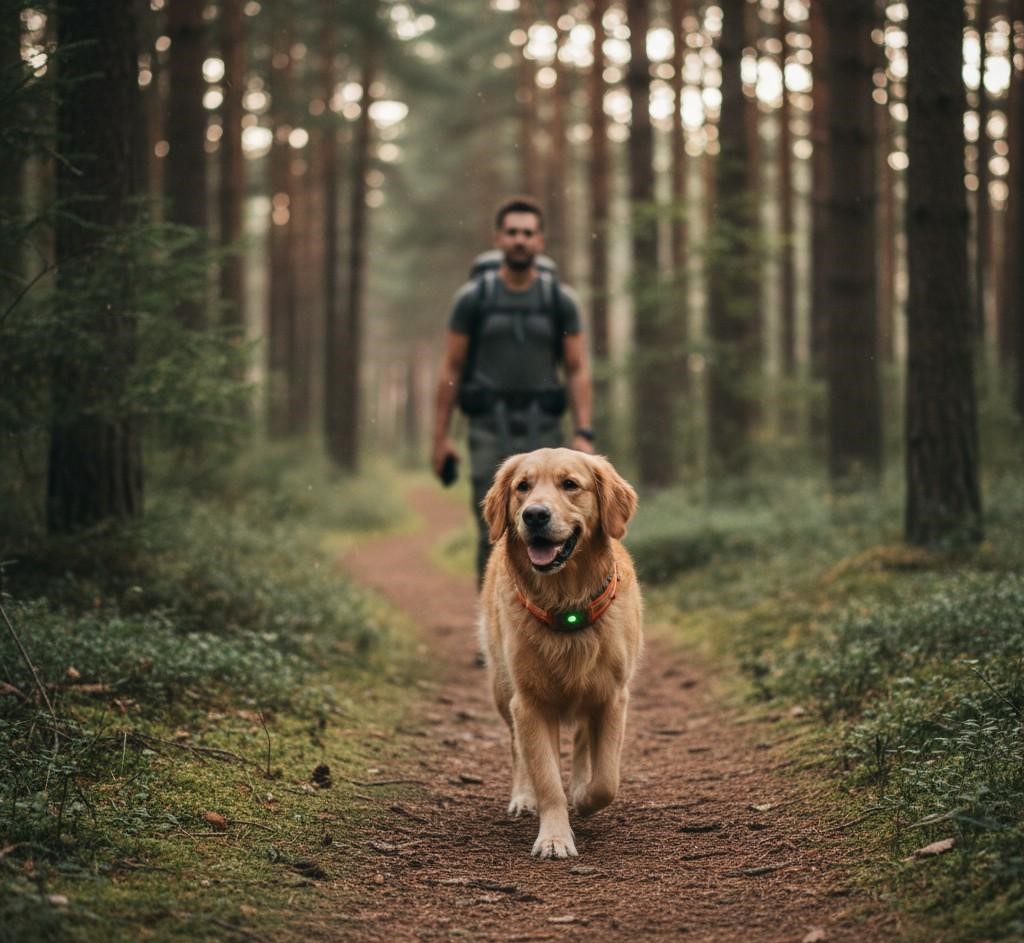
1. The Forest Hiker: The LTE-M Struggle
Imagine you’re deep in the Pacific Northwest or the Appalachian Trail. You bought a Fi or Tractive because the box said “unlimited range.”
But here is the technical reality: these devices use LTE-M (Low-Power Wide-Area) cellular signals. While LTE-M travels further than your standard 5G phone signal, it has a mortal enemy: The Canopy.
In a dense forest, the moisture in the leaves and the sheer thickness of the timber act as a shield. Even if satellites can “see” your dog, the collar lacks the power to “punch” that data through the trees to the nearest cell tower, which might be 10 miles away.
For the Forest Hiker, a cellular tracker isn’t a safety device; it’s a history logger. You won’t know where your dog is now; you’ll only see where they were before the signal cut out.
2. The Mountain Climber: The “Signal Shadow”
For those who tackle switchbacks and rocky ridges, the danger isn’t trees—it’s Signal Shadowing. GPS requires a “line of sight” to at least four satellites.
If your dog bolts around a granite corner or slides into a steep ravine, the mountain itself literally blocks the signal.
On Reddit, users frequently describe the “Ghost Dog” effect: your app shows the dog’s last known position on the ridge, but as they descend into a “shadowed” valley, the tracker goes dark.
Without a VHF (Very High Frequency) backup—the kind used by hunters—you are left tracking a ghost until the dog climbs back into a line of sight.
3. The ‘Bolt-Risk’ Urban Walker: The Wi-Fi Sniffing Illusion
Urban owners are often the most “delusional” because their apps always show a “Perfect” signal. This is usually Wi-Fi–based positioning, not true GPS. In cities, your tracker looks for local Wi-Fi routers to “guess” its location.
The problem? If your dog bolts into a construction zone, a large park, or an alleyway with no routers, the “Wi-Fi Sniffing” fails, and the device tries to switch to GPS.
But because of the “Urban Canyon Effect” (signals bouncing off glass skyscrapers), the GPS location can be off by two city blocks. For a dog running toward a busy intersection, “two blocks away” is the difference between a rescue and a tragedy.
None of these scenarios means GPS tracking is useless—but they do determine whether it works as prevention or only as recovery.
So what does this mean for off‑leash trust? Because reliability changes with the environment, you can’t treat any tracker as a guarantee
Can You Trust a GPS Tracker for Off-Leash Outdoor Use?
The question “Are GPS dog trackers reliable?” surfaces repeatedly in outdoor dog communities because the stakes feel higher when a dog is off-leash. Trust, in this context, does not mean guaranteeing control—it means reducing uncertainty.
The False Sense of Total Control GPS Trackers Can Create
Some owners unconsciously loosen recall discipline because a tracker is present, especially with dogs prone to anxiety or bolting. This shift often happens gradually and without awareness. Technology can create confidence, but confidence without boundaries increases risk.
Where GPS Adds the Most Value
GPS trackers shine during recovery. They shorten search time, reduce panic, and provide directional guidance when visual contact is lost. Used alongside training, they meaningfully reduce worst-case outcomes without encouraging risky behavior.
Battery Life Outdoors: Why Real Use Rarely Matches Claims
Battery life is where many outdoor users feel misled.
Not because manufacturers lie—but because assumptions differ
Advertised battery life assumes limited movement, infrequent updates, and power-saving modes. Outdoor walks rarely fit that profile. Active dogs trigger frequent updates, live tracking sessions, and constant data transmission.
Why Movement Drains Battery Faster Than Distance
Battery drain is driven by activity frequency, not miles. A dog zig-zagging through a trail drains more power than one walking steadily for longer.
Cold Weather and Battery Performance
Cold outdoor temperatures reduce battery efficiency. This often surprises owners during winter hikes and early morning walks.
A “7-day battery” may shrink dramatically during real outdoor use. That doesn’t mean the tracker is unreliable—it means expectations need recalibration.
Alert Delays and Missed Notifications
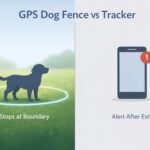
Alerts are often treated as emergency systems, but they are better understood as warning mechanisms. Several steps occur between your dog crossing a boundary and your phone receiving a notification.
Why “Instant Alerts” Rarely Mean Instant
The collar must first detect movement, then transmit data through cellular networks, which may be prioritizing other traffic.
After that, servers process the event and push it to your phone. Even a small delay at each stage can create noticeable lag outdoors.
Adjusting Expectations Without Ignoring Risk
This does not mean alerts are useless. It means they work best when you view them as confirmation rather than a means of prevention. Owners who expect alerts to replace supervision are more likely to feel let down than those who treat them as an added safety layer.
This distinction matters most during off-leash use, where seconds translate into distance very quickly
The AirTag Trap: Why Bluetooth is a Dangerous Choice for Hikers
Bluetooth trackers feel reliable—until they suddenly aren’t.
Devices like AirTags work by pinging nearby phones. In populated areas, this works well. In trails or low-traffic outdoor zones, the network disappears.
GPS dog trackers don’t rely on nearby phones, making them far more suitable for outdoor use. However, they introduce other limitations, like battery drain and cellular dependency.
Why Bluetooth Feels Reliable—Until It Isn’t
Bluetooth confidence comes from crowds. Outdoors, silence replaces that network.
When Bluetooth Can Still Make Sense
Urban parks or short-range recovery scenarios. Outdoors, Bluetooth should be viewed as a supplement—not a solution.
How to Test Your GPS Dog Tracker: The “No-Fail” Field Manual
Dog owners should not rely solely on marketing claims. Run these two tests before you take the leash off.
Step 1: The “Basement & Bunker” Test (Indoor Reality)
Most owners assume that if the tracker works in their living room, it’s good. Wrong. Your living room has Wi-Fi.
- The Test: Take the collar into your basement, a windowless bathroom, or a metal-sided garage. Turn off your phone’s Bluetooth and Wi-Fi.
- The Goal: The Goal is to determine if the collar can detect a signal using only its internal antenna.
- The Reality Check: If the app says “Searching…” for more than 3 minutes, you now know that if your dog hides under a shed or enters an abandoned building, you will lose their signal instantly.
Step 2: The “Escape Alert” Speed Test (The Car Drill)
This is the most critical test. Some users on different forums complain that “Escape Alerts” often arrive 5 minutes after the dog is gone. At 20mph, a dog is over a mile away in 5 minutes.
- The Test: Have a friend take the collar and drive away while you stay home.
- The Stopwatch: Start a timer the moment the car crosses your “Virtual Fence” (Geofence).
- The Verdict:
- Under 30 seconds: Elite. You have a chance.
- 1–2 Minutes: Average. Your dog is already in the next neighborhood.
- 5+ Minutes: Dangerous. The “Escape Alert” is merely a “Your Dog is Gone” notification.
Subscription Traps: The Hidden Cost of Reliability
The industry’s dirty secret is that you aren’t buying a device; you’re renting a lifeline.
The “Brick” Factor
When you stop paying your monthly fee for a Tractive or Fi the device doesn’t just lose “premium” features—it becomes a high-tech paperweight.
These trackers rely on a built-in eSIM. Unlike your phone, you can’t just swap the SIM card. If the company goes out of business or you miss a payment, the GPS hardware inside is physically incapable of sending data to your phone. You are locked into their ecosystem forever.
Upfront vs. Long-Term: The $600 Math
Delusional customers often scoff at the $600–$800 price tag of a Garmin Alpha. They would rather pay $50 for a Tractive. Let’s look at the “Hidden Cost” over 5 years:
- The “Cheap” Tracker: $50 (Device) + $15/month (Subscription) = $950 total.
- The “Expensive” Garmin: $700 (Device) + $0/month = $700 total.
This doesn’t mean cellular trackers are a scam—it means their value depends heavily on where and how you walk your dog.
Not only is the Garmin more cost-effective in the long run, but it also utilizes Satellite/VHF technology that doesn’t require a cell tower.
If you are a serious hiker, paying for a subscription to a cellular-dependent tracker is essentially paying for a service that may lose connectivity in no-service areas.
Final Verdict
GPS dog trackers are tools, not promises. Their reliability depends less on brand or features and more on how well owners understand their operating boundaries.
When owners match expectations to real-world behavior, trackers feel dependable. When expectations are absolute, even minor delays feel like failure.
Before relying on any tracker outdoors, ask whether you understand how it fails—not just how it works. That awareness is what turns technology into protection rather than false reassurance.
If you’ve used a GPS dog tracker outdoors, what surprised you most—accuracy, battery life, or alert timing?
Frequently Asked Questions
How accurate are GPS collars outdoors in real-world conditions?
It depends on terrain and environment. Open fields are usually reliable, while forests, mountains, and urban canyons can cause location drift or delays.
Do GPS dog trackers work without cell service?
No. Trackers can record your dog’s location, but they cannot send updates to your phone without cellular coverage. You’ll see data once service is restored.
What should I do if my GPS tracker stops updating while my dog is missing?
Stay calm. Use the last known location, move to open areas or higher ground, and search methodically. Trackers often reconnect once the signal improves.
Why does my GPS tracker feel delayed or behind my dog’s real position?
Why does my GPS tracker feel delayed or behind my dog’s real position?
The Smart Pet Gears Team (Team SPG) is a group of pet care researchers, product analysts, and writers dedicated to helping dog owners make informed decisions about smart collars, GPS trackers, and pet technology.
Our articles are based on manufacturer documentation, veterinary guidelines, testing insights, and independent analysis to ensure accuracy and transparency.