Here’s an uncomfortable truth most pet-tech reviews won’t say out loud: a surprising number of people who buy smart dog collars end up using them far less than they expected.
It leads to a fundamental question: Do smart dog collars really work in a practical, everyday sense, or are they just another gadget for the drawer?
Not because the dogs hate them. Not because the devices break. Simply because real life turns out to be messier than the app screenshots suggest.
That does not mean smart collars are useless. Many owners do get real value from them, and some will tell you the device has already paid for itself by preventing a full-blown panic.
But the gap between the polished promise of a “smart guardian for your dog” and everyday reality—delayed updates, battery anxiety, and data that is harder to interpret than advertised—is wider than most ads admit.
If you have ever wondered whether a smart dog collar would genuinely improve your routine or add another subscription you feel obligated to check, this article cuts through the hype.
What Smart Dog Collars Are Meant to Fix
These devices popped up as a way to ease the worries that come with being a dog parent, especially in a world where our pets can sometimes outsmart us or just plain wander off.
The Problems We Expect Them to Solve
Most people do not buy a smart dog collar because they love gadgets. They buy one because something feels uncertain or out of their control. Escaping is often the biggest fear.
Escaping is often the biggest fear—and in those moments, owners usually want to know whether a GPS smart collar can actually help them find their dog.
A dog that slips out of the yard, pulls away on a walk, or bolts after a squirrel can turn a normal day into a panic-filled search.
Beyond escape, there is the quieter anxiety of not knowing. Owners wonder if their dog is getting enough exercise, sleeping well, or acting differently when they are not around.
For people who work long hours or leave their dog with family members, sitters, or daycare, that lack of visibility can be stressful.
Smart collars are positioned as a solution to all of this. They promise location awareness, activity tracking, and constant confirmation that everything is fine. In theory, they turn guesswork into knowledge and worry into confidence.
Why Those Problems Are Harder Than They Look
The challenge is that these problems are not purely technical. Dogs move in unpredictable ways. Signals weaken indoors, in dense neighbourhoods, or in rural areas.
Dogs can change their actions for many reasons that have nothing to do with health or fitness. Even something as simple as knowing where your dog is becomes complicated once real-world conditions enter the picture.
Some issues don’t become obvious right away, so this guide on common GPS dog collar problems breaks down what most owners experience over time.
Where Smart Dog Collars Actually Work Well
When everything aligns just right, these collars can feel like a trusty sidekick, offering insights that make a tangible difference in how we care for our dogs.
Location Awareness That Helps in Real Situations
When smart collars work well, location awareness is usually the feature that proves its worth first. Not because it is perfectly precise, but because it gives direction when you would otherwise have none.
If a dog slips out of the yard or wanders off in an unfamiliar area, seeing a general location can shorten the search and reduce panic.
In real situations, owners often use this information to narrow down areas rather than track every step.
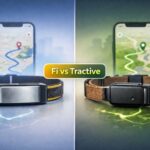
Devices like the Fi Series 3+ or Tractive have gotten praise for this in user reviews, especially in urban or suburban areas with good signal. They’re not pinpoint precise every time—maybe off by 20–30 feet—but that’s usually enough to narrow down a search.
This usefulness is strongest when expectations are realistic. Owners who treat location data as a helpful clue tend to be satisfied. Those who expect instant, exact positioning often feel disappointed, even if the collar technically does what it claims.
Activity Data Owners Truly Pay Attention To
Activity tracking is another area where smart collars can quietly add value. Over time, many owners notice patterns rather than daily numbers. They learn what a normal day looks like for their dog and can spot changes that feel meaningful.
For example, a dog that suddenly moves far less than usual over several days may prompt an owner to pay closer attention. The data does not diagnose anything, but it encourages awareness. This kind of long-term pattern recognition is where activity tracking tends to stick.
Collars like the PetPace monitor things like sleep quality and daily movement, helping spot shifts that might otherwise go unnoticed.
Over time, owners say they start relying on trends rather than nitpicking daily stats. This builds habits that improve life for both pet and person without feeling overwhelming.
Peace of Mind as a Practical Benefit
Perhaps the most underestimated benefit of smart dog collars is peace of mind. This is not something that shows up in specifications, but it matters deeply to many owners.
Simply knowing that there is a tool in place can reduce anxiety, especially during travel, changes in routine, or periods when the dog is cared for by someone else.
Where the “Smart” Promise Breaks Down
No gadget is flawless, and smart collars have their share of stumbles that can leave owners frustrated rather than impressed.
Tracking and Alerts That Don’t Always Deliver
Tracking and alerts are often the most heavily advertised features, and they are also where frustration shows up quickly. Delays in updates, missed notifications, or location drift can erode trust.
An alert that arrives late or triggers incorrectly teaches owners to rely on their instincts instead of the app.
Over time, inconsistent performance changes habits. Owners stop checking as often or ignore alerts altogether. The collar still works in theory, but in practice, it no longer feels dependable.
This breakdown is rarely dramatic. It is a slow erosion of confidence caused by small, repeated disappointments rather than a single failure.
Health Signals That Are Easy to Misinterpret
Health-related insights sound powerful, but they are also the easiest to misunderstand. Changes in sleep, movement, or rest patterns can be influenced by weather, routine, stress, or age. Without context, numbers can feel alarming or misleading.
Many smart collars can track vitals like heart rate or respiration, but these are not medical-grade tools. A high reading could be excitement, not illness.
Some owners assume that health data equals early diagnosis. When that expectation is not met, frustration follows. The collar may detect a change, but it cannot explain why it happened or what to do next.
Used carefully, these signals can prompt useful conversations with vets. Used alone, they can create unnecessary worry or false reassurance.
Why Some Owners Stop Using the App
Over time, many owners gradually disengage from the app. This does not always mean the collar failed. Often, it means the daily value no longer feels strong enough to justify the effort.
Frequent notifications, unclear insights, or the feeling of being monitored without gaining clarity can lead to fatigue. Once trust drops, usage follows. The collar becomes something that is worn but rarely checked.
This pattern explains why reviews vary so widely. The same product can feel essential to one owner and pointless to another.
Why Results Differ So Much Between Owners
It’s not just the collar; it’s how it meshes with your lifestyle, your dog’s quirks, and the world around you that determines if it’s a hit or a miss.
Owner Habits That Shape the Outcome
Consistency matters more than features. Owners who set realistic expectations, check data occasionally, and respond thoughtfully tend to have better experiences. They use the collar as a tool, not a solution.
Those who expect instant answers or constant reassurance often feel let down. Technology amplifies habits rather than replacing them. A thoughtful owner gets thoughtful value. A stressed owner may feel even more overwhelmed by data.
Environment and Dog Personality Factors
Context shapes everything. A dog living in a dense city behaves differently from one in open land. Signal strength, routine, and freedom of movement all influence how useful a collar feels.
Dogs themselves also vary. Calm dogs produce cleaner data. High-energy or anxious dogs generate patterns that are harder to interpret. The collar does not change the dog. It only reflects what is already there.
Marketing Claims vs Everyday Reality
Ads paint a picture of effortless perfection, but real use reveals a more grounded truth.
Features That Sound Bigger Than They Feel
Marketing often highlights best-case scenarios. Real life tends to deliver incremental improvements instead. Location tracking helps, but it does not eliminate escape risk. Activity data informs, but it does not replace engagement. Health insights alert, but they do not diagnose.
What Ads Rarely Explain Clearly
What is often missing from promotions is context. Signal limitations, learning curves, and the need for owner judgment are rarely emphasized. Ads show smooth experiences, not the adjustments required to make the technology fit into real life.
Understanding this gap helps owners approach smart collars with clearer eyes and fewer regrets.
What Smart Collars Can — and Cannot — Replace
They’re supplements, not substitutes, for the human elements that keep dogs thriving.
Where Tech Supports Human Judgment
Collars shine when paired with pros—vets use the data to spot patterns, like irregular respiration hinting at allergies, speeding up care.
Trainers incorporate activity logs to tailor sessions, and owners’ intuition gets a boost from alerts prompting closer looks. It’s like having an extra set of eyes, supporting decisions without overriding them.
When Simpler Solutions Still Work Better
Sometimes, simpler tools remain more effective. Secure fencing, consistent training, routine walks, and observation often solve problems more reliably than any device. Technology can enhance these basics, but it cannot replace them.
Owners who start with fundamentals and add smart collars later tend to feel more balanced about their value.
So, Do Smart Dog Collars Really Work?
It depends, but the answer to whether smart dog collars really work depends heavily on context.
When the Answer Is Yes
Smart dog collars work when expectations match reality. They are effective for owners who want added awareness, occasional reassurance, and long-term patterns rather than constant certainty.
In these cases, the collar becomes a quiet assistant that fits into daily life
When They Mostly Just Sound Smart
The mismatch hits when expectations soar too high, like assuming flawless health diagnostics or zero-maintenance operation. In spotty areas or with finicky apps, they underwhelm, feeling more gimmicky than essential.
How to Decide If One Makes Sense for You
The right question is not whether smart dog collars work in general, but whether they fit your life, your dog, and your expectations.
Think about the specific problem you want help with and how much attention you are willing to give to interpreting the data. A smart collar is a tool meant to support your role, not replace it.
When chosen thoughtfully, these collars can add clarity and confidence. When chosen out of fear or hype, they often add noise instead.
Ultimately, Smart collars provide location data and behavior trends. They do not replace supervision, training, or judgment.
The Smart Pet Gears Team (Team SPG) is a group of pet care researchers, product analysts, and writers dedicated to helping dog owners make informed decisions about smart collars, GPS trackers, and pet technology.
Our articles are based on manufacturer documentation, veterinary guidelines, testing insights, and independent analysis to ensure accuracy and transparency.