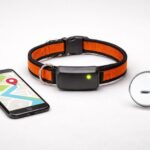
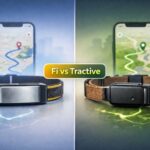
GPS Dog Fence vs. GPS Tracker comparisons often create confusion because both systems rely on virtual boundaries and satellite positioning.
Marketing language frequently overlaps. Many products use similar terminology, and the word “fence” is applied broadly even when containment is not the primary function.
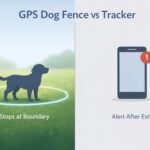
In practice, these technologies serve different purposes. A GPS tracker alerts you after a dog leaves a defined area. A GPS fence is designed to prevent the dog from crossing that boundary in the first place through corrective feedback.
That distinction fundamentally changes how each system performs in real-world scenarios.
Understanding what occurs when a dog approaches and challenges an invisible boundary is essential before deciding which solution fits your environment and containment goals.
Quick Refresher
At a basic level, a GPS dog tracker is built for location visibility. It tells you where your dog is and alerts you if they leave a defined area. Its strength lies in helping you recover your dog after it’s wandered off.
A GPS dog fence, however, is built around containment. Instead of simply sending you an alert, it interacts with your dog at the boundary itself through tone, vibration, or correction. Its purpose is not just to inform you, but to discourage the escape from happening in the first place.
That difference is recovery versus prevention. That is what shapes everything else in the GPS dog fence vs GPS tracker discussion.
Now let’s look at how that plays out in real-world use.
The Notification Fence vs The Correction Fence
This is where most confusion happens.
What Is a “Notification Fence”?
A notification fence is what you get with most standard GPS trackers. Inside the mobile app, you draw a boundary around your home or any location you choose. When your dog’s GPS position moves outside that zone, the system sends you an alert.
For example, tracking-focused collars like Fi and Tractive are designed primarily for location monitoring and geofence alerts rather than real-time containment.
That’s it.
The collar does not respond physically. There is no sound warning for the dog. No vibration. No correction. The system simply records that your dog has crossed the digital line and notifies you afterward.
In simple terms, the notification fence informs the owner, not the dog.
That distinction is important because it defines the system’s role. It is reactive. It waits for the boundary to be crossed and then sends information to you so that you can take action.
For many situations, this can be enough. If your goal is awareness rather than prevention, a notification fence does its job. But it is not built to stop a determined dog in that moment.
What Is a “Correction Fence”?
A correction fence, used in dedicated GPS fence systems, works differently. It is designed to create a boundary that your dog learns to respect.
When your dog approaches the edge of the boundary, the collar reacts immediately. Typically, it starts with a warning tone or vibration. If the dog continues forward, a correction may follow. The purpose is not to punish, but to create an immediate association between crossing the line and receiving feedback.
Systems such as Halo and SpotOn are built specifically for GPS-based containment rather than just notification tracking.
Over time, many dogs learn where the boundary exists and avoid crossing it altogether.
The key difference here is that the system interacts directly with the dog at the moment of the boundary event. It does not depend on your phone. It does not wait for a push notification. It responds in real time.
That is why this type of fence is often referred to as a containment system rather than a notification system.
Why These Two Systems Are Not Interchangeable
At first glance, both systems may show a boundary in the app. Both may use the word “fence.” But their behavior is fundamentally different.
A notification fence tells you something has already happened.
A correction fence attempts to influence what is happening right now.
If you are relying on the system to physically prevent your dog from running toward the road or chasing something into the distance, that timing difference becomes critical. A delayed alert cannot replace immediate feedback delivered directly to the dog.
That’s why these systems should not be treated as substitutes for one another. They serve different goals, and understanding that helps you choose correctly.
If you’re still unsure how these systems differ in real-world use, this breakdown makes it clearer.
| Feature | GPS Tracker (e.g., Fi, Tractive) | GPS Fence (e.g., Halo, SpotOn) |
| Primary Goal | Finding a lost dog (Recovery) | Keeping a dog inside (Containment) |
| Who gets the alert? | The Owner (Smartphone) | The Dog (Collar Tone/Vibration) |
| Response Time | 30 seconds to 2 minutes | Milliseconds |
| Training Required? | None | 2–3 weeks of boundary training |
The Lag Time Problem Most Buyers Don’t Consider
When comparing a GPS dog fence vs GPS tracker, once you understand the difference between notification and correction, the next factor becomes even more important: time.
How Tracker Fences Process a Boundary Exit
When a dog crosses a tracker-based geofence, several steps take place behind the scenes. The collar first updates its GPS location. That location data is then transmitted over the cellular network to a server. The server processes the information and determines that the boundary has been crossed. Finally, a push notification is sent to your phone.
Each step takes a small amount of time. Individually, it may not seem significant. But together, they create a delay between the moment your dog leaves and the moment you become aware of it.
This delay is not necessarily a flaw. It is simply how the system is designed. The tracker’s primary goal is location reporting, not immediate behavioral intervention.
The Typical 1–2 Minute Delay
In real-world use, many tracker fences can take up to one or two minutes before sending an alert. In areas with weaker signal coverage, it can sometimes take longer.
Now consider what a dog can do in two minutes. A medium-sized dog running at full speed can travel a considerable distance in that time. Even a smaller dog can move far beyond the edge of your yard before your phone buzzes.
By the time you read the alert, put on your shoes, and step outside, your dog may already be well down the street or out of sight.
The tracker technically works as promised. It sends the alert. But by the time you react, the escape has already happened.
Real-World Impact of a 2-Minute Delay
For some owners, a short delay may not matter. If you live in a quiet area, if your dog rarely runs, or if you are always outside supervising, the risk may feel manageable.
But if you live near traffic, open fields, or wooded areas where wildlife can distract your dog, those two minutes can change the situation quickly.
This is where the difference between minutes and milliseconds becomes more than a technical detail. It becomes a safety factor.
Milliseconds vs Minutes: How GPS Fences React
To understand why GPS fences are described as containment systems, we need to look at how they handle timing.
How Containment Is Triggered
In a dedicated GPS fence, the boundary logic is handled directly by the collar. When your dog approaches the edge of the virtual perimeter, the collar detects that position instantly. There is no need to send information to your phone first. The collar itself decides when to trigger a warning.
This design removes the long communication chain that tracker fences rely on.
Instead of waiting for a location update to travel through a network and back to your device, the response happens immediately at the source.
Response Speed
Because the collar manages the boundary in real time, the response is measured in milliseconds. The warning tone or vibration occurs at the moment your dog crosses the line. If needed, correction follows without delay.
This immediate feedback is important because dogs learn best when the consequence closely follows the action. When the timing is tight, the dog connects the two events clearly.
Over time, that connection can reduce attempts to cross the boundary at all.
Why Speed Changes the Outcome
When the response is immediate, the system shifts from being reactive to preventive. Instead of you chasing your dog after they leave, the collar discourages the behavior before it becomes a full escape.
That shift in outcome is the core difference between a tracker fence and a GPS containment fence.
The difference isn’t just technical. It’s behavioral. A tracker informs you after something happens, while a containment fence influences what happens in the first place.
Prevention vs Recovery: A Strategic Difference
Now that we’ve examined timing, let’s zoom out and look at the broader strategy.
A GPS tracker is primarily a recovery tool. If your dog gets lost during a hike or slips out of the yard, you can open the app and see their location. It helps you bring your dog back.
A GPS fence is primarily a prevention tool. Its goal is to reduce the chance of your dog leaving the designated area in the first place.
Both tools are valuable, but they address different risks.
If your biggest concern is losing your dog in unfamiliar territory, tracking makes sense. If your biggest concern is your dog running toward a road from your home, containment may be the stronger choice.
Choosing between them depends on which problem you are trying to solve.
When a Tracker Fence Is Enough
There are many situations where a notification fence works perfectly well. If you live in an apartment and your dog is always on a leash outdoors, you may not need containment. If your dog is calm and rarely attempts to run off, you may simply want alerts as an added layer of awareness.
Some owners also use tracker fences as a backup system. Even if they have a physical fence, they appreciate receiving a notification if their dog somehow slips out.
In these scenarios, a tracker provides reassurance without the need for correction-based containment.
The key is understanding its limits and not expecting it to function as something it is not designed to be.
When a Dedicated GPS Fence Is Necessary
On the other hand, if you have an energetic dog with a strong instinct to chase, containment becomes more important. Dogs with high prey drive or escape habits may not respond to verbal commands once they start running.
If your property is large, unfenced, or located near traffic, relying only on a notification system may feel risky.
In these cases, the immediate boundary feedback of a correction fence can provide a stronger layer of protection. Over time, as your dog learns the limits, the need for active correction often decreases.
Why Training Is Essential for GPS Fences
A GPS fence isn’t something you just switch on and forget. Unlike a tracker that works the moment you attach it, a containment system depends on your dog understanding the warning tone.
Most systems require a couple of weeks of consistent boundary training. Without that step, a dog may run straight through the correction, especially if something exciting grabs their attention. When that happens, it’s usually not the device failing — it’s incomplete training.
Once the dog understands the boundary, the system becomes far more reliable.
Can One Replace the Other?
This is where many buyers try to simplify the decision. They ask whether one device can fully replace the other.
In most cases, a tracker cannot replace a true containment fence because it does not provide immediate behavioral feedback. It can tell you where your dog is, but it cannot stop your dog from moving.
Some GPS fence systems include tracking features, but their strength lies in boundary control rather than long-distance pursuit tracking.
That is why some dog owners choose to use both. A containment system handles prevention at home, while tracking provides visibility if something unexpected happens outside the boundary.
Whether you need both depends on your dog’s behavior and your environment.
Final Takeaway: Choose Based on Reaction Speed, Not Features
When it comes down to it, the choice between a GPS dog fence vs GPS tracker isn’t about which one sounds more advanced.
It’s about how much control you want at the boundary itself.
If you’re comfortable stepping in after your dog leaves, tracking gives you visibility. You stay informed, and you respond.
But if your goal is to reduce the chance of escape altogether, then timing becomes the deciding factor. A containment system reacts in the moment, not minutes later.
Neither system is universally better. The right choice depends on how your dog behaves, where you live, and how much risk you’re willing to tolerate at the boundary itself.
Because when your dog tests that invisible line, the system you choose determines what happens next.
Frequently Asked Questions
Can GPS dog trackers stop dogs from running away?
Most trackers use geofencing to send a notification after your dog has crossed the boundary. They do not physically stop movement or prevent escape.
Which is safer: a GPS dog fence or a GPS tracker?
It depends on your goal. A GPS tracker helps you recover your dog after they leave. A GPS fence focuses on preventing them from leaving in the first place.
Will a GPS fence work if I don’t have cell service at my house?
Many GPS fences use satellites for boundary correction, so containment still works without cell service. However, you may not receive live tracking updates if the collar can’t connect to a cellular network.
The Smart Pet Gears Team (Team SPG) is a group of pet care researchers, product analysts, and writers dedicated to helping dog owners make informed decisions about smart collars, GPS trackers, and pet technology.
Our articles are based on manufacturer documentation, veterinary guidelines, testing insights, and independent analysis to ensure accuracy and transparency.