A family recently tested a virtual fence in their lively backyard. At first, everything looked impressive—the collar mapped the space quickly, responded well during training, and kept the dog confidently within the boundary.
However, as the days passed, weather changes, tall trees, and sudden distractions caused the virtual fence to behave a little differently than expected.
It wasn’t a flaw, just the nature of the technology—something new buyers often don’t discover until they rely on it.
Many of us buy these collars hoping they’ll help our dogs enjoy more freedom outdoors while giving us peace of mind.
But without understanding how a smart dog collar with virtual fence behaves in real-world conditions, owners may overestimate their reliability.
What a Virtual Fence Really Is in a Smart Collar
Virtual fencing sounds futuristic, but at its core, the concept is simple: teach the dog to respond to cues instead of relying on a physical boundary. Nothing Fancy.
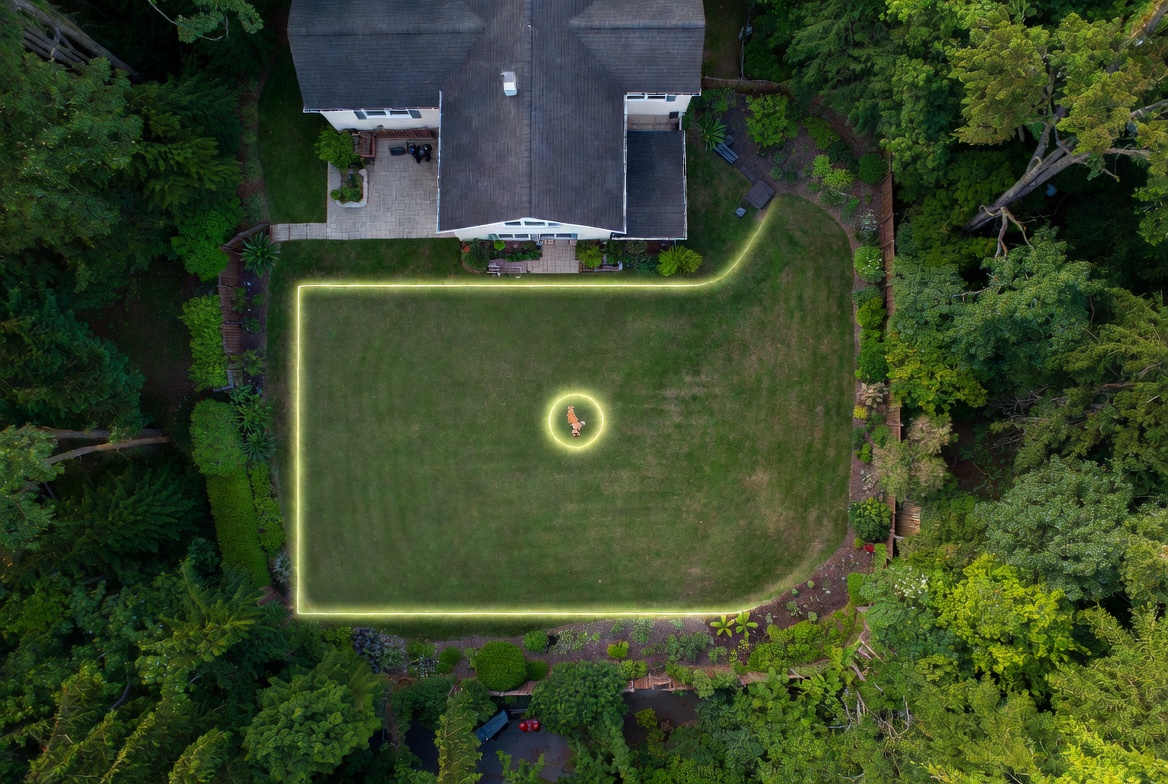
Basic Idea Behind a Virtual Fence: The “Invisible” Boundary
A smart collar doesn’t create a real barrier. It creates a GPS boundary that your dog learns to respect through sound cues or vibrations. Inside the app, you draw an invisible shape around your yard. When your dog approaches the edge, the collar alerts them.
However, accuracy depends on satellite strength, LTE connectivity, app responsiveness, and consistent training.
Why Real-World Conditions Affect Accuracy
In perfect conditions, the system behaves the way brands describe. But most of our yards aren’t perfect. Trees block signals. Clouds interfere with accuracy. Dogs get distracted. Software lags.
So instead of getting a “digital wall,” what we actually get is a guideline. It’s something helpful, something supportive, but not something that can physically or emotionally guarantee safety.
And that difference matters far more than most brand videos let on.
How Virtual Fences Behave in Real Life
Once the system is set up, everyday usage starts revealing small but important behaviors that every owner should know about.
GPS Drift You’ll Notice Immediately
When you test a GPS virtual fence for the first time, the first thing you notice is that the boundary doesn’t stay fixed. Even on a clear day, the virtual line shifts by a few feet. Sometimes that shift is barely noticeable.
Other times it creates frustrating confusion when the collar beeps too early or too late.GPS drift is a natural part of how these systems work.
GPS drift is the same phenomenon seen in smartphone location tracking. In a backyard, this wobble translates to warnings that don’t feel consistent.
When Your Yard Confuses the Collar
During one session in a tree-filled yard, the collar genuinely believed the dog was off the property even though he was calmly lying on the porch. It was simply the limitation of GPS trying to communicate with satellites through layers of branches and leaves.
This is something every dog parent should understand early: a virtual fence cannot maintain perfect boundaries in imperfect environments.
Case Example: Daisy and the “Shrinking Yard”
A friend in Ohio used a virtual-fence collar for her Labrador, Daisy. Their yard is surrounded by big maples, and Daisy loves sprinting up and down the fence line during play.
Most days, the collar behaved well. But after a storm, the GPS signal weakened enough that the boundary shifted by nearly six feet inward.
Daisy received warning alerts right in the middle of the yard. She froze, confused, and backed away. She avoided that area temporarily after repeated alerts.
How Weather Impacts Smart Dog Collar With Virtual Fences
Weather plays a surprisingly large role in boundary accuracy, even more than most brands admit.
Storms, Clouds & Wind Affect Virtual Fence Accuracy
One thing many of us don’t expect is how much the weather affects these collars. Boundary accuracy is typically strongest in clear conditions and may decrease during storms or heavy cloud cover.
Case Example: Bruno the Husky
During one test, we worked with a Husky named Bruno who ignored every alert during a windy evening. The collar wasn’t malfunctioning.
The problem was the lag between the satellite data and the app’s ability to update. By the time the warning reached his collar, Bruno had already crossed the line.
Storm-driven changes don’t permanently harm the collar, but they absolutely reduce precision during the moments you need the system to be sharpest. A smart dog collar with a virtual fence isn’t weatherproof in the behavioral sense. It’s weather-dependent.
Notification Lag Problem
Before assuming the system works in real time, it’s important to understand how heavily it depends on connectivity.
Alerts Are Only as Fast as Your Network
Every brand advertises “instant alerts,” but instant depends on multiple connections working perfectly. Your collar needs a strong LTE signal. Your phone needs a strong signal. The app needs to refresh quickly.
In strong-signal areas, the alerts feel nearly real-time. But in rural or patchy-coverage locations, alerts can lag by five, ten, or even twenty seconds.
Why Lag Matters in Real Emergencies
Imagine your dog spotting a rabbit. They bolt toward the road. Your phone buzzes twelve seconds later, saying they’ve left the boundary. By then, they’re already halfway down the block.
A woman from Michigan shared that she began running outside only when she physically saw her dog on the neighbour’s driveway. The app was still showing the dog “inside the safe zone” for a few seconds after. This is not unusual. It is a common experience.
Are Smart Collar Virtual Fences Actually Safe?
Virtual fence collars raise important questions around reliability and correction accuracy, especially when your dog’s safety is at risk.
Safe as Support.. Not Safe as Primary Protection
They are safe when we understand what they are meant to do. They guide behavior through cues. They teach boundaries through repetition. They create an extra layer of awareness for both the dog and the owner. All this requires training.
But they are not a replacement for a physical fence. They cannot physically restrain a dog in a moment of excitement, fear, or instinct.
When Instinct Overrides Alerts
A collar was tested on a Beagle who behaved perfectly on normal days. But the moment he caught the scent of a squirrel, the beep became background noise. He sprinted past it as if someone had turned off the feature.
A dog’s personality influences success more than the collar’s technology.
When Virtual Fences Work Surprisingly Well
Virtual fences perform best in open yards with strong satellite visibility and consistent signal strength. The audio cues become familiar, almost routine, and the yard gains a natural sense of shape.
A Success Example: Mason the Golden Retriever
This is the example of Mason, a Golden Retriever who took to the system beautifully. With clear skies and perfect visibility, he learned within four days to stop right at the warning beep every single time.
His temperament was naturally cooperative, and the environment supported the technology. It was the ideal combination.
For dogs like Mason, a virtual fence honestly improves daily outdoor freedom.
When Virtual Fences Struggle Again and Again
Not every yard or dog temperament pairs well with this technology. Certain environments create unavoidable problems. Thick foliage, tall buildings, hills, shared walls, or rural areas with low LTE signal make the boundary shift constantly. Dogs get mixed messages. Owners get frustrated.
Dogs Whose Personalities Resist Alerts
Case Example: Finn and High-Impulse Behavior
A Border Collie named Finn barely acknowledged the alerts whenever something moved. His impulse to run was stronger than any sound cue. The collar wasn’t failing. It simply couldn’t override instinct. This is why realistic expectations matter.
The Emotional Impact of Virtual Fence Alerts on Dogs
Dogs aren’t machines. Alerts affect them emotionally, and not All Dogs React the Same Way. We often think of alerts as harmless signals, but dogs respond emotionally. Some remain calm. Some get confused. Some freeze and refuse to move.
When Alerts Cause Hesitation
Case Example: Ria and Boundary Sensitivity
During testing, a sensitive mixed-breed dog named Ria became afraid of one half of her yard because she associated that direction with the vibration alert. Even when the fence wasn’t active, she avoided that area.
The collar didn’t harm her physically. But emotionally, the boundary became a source of hesitation. The owner had to help her rebuild confidence before she used the whole yard again.
Virtual fences are not harmful in the traditional sense, but rushed training or inconsistent boundaries can create emotional stress.
Training: The Part Most Dog Parents Underestimate
Training determines whether virtual fencing succeeds or fails. Most of us assume these collars work straight out of the box. But the truth is, training determines success more than hardware.
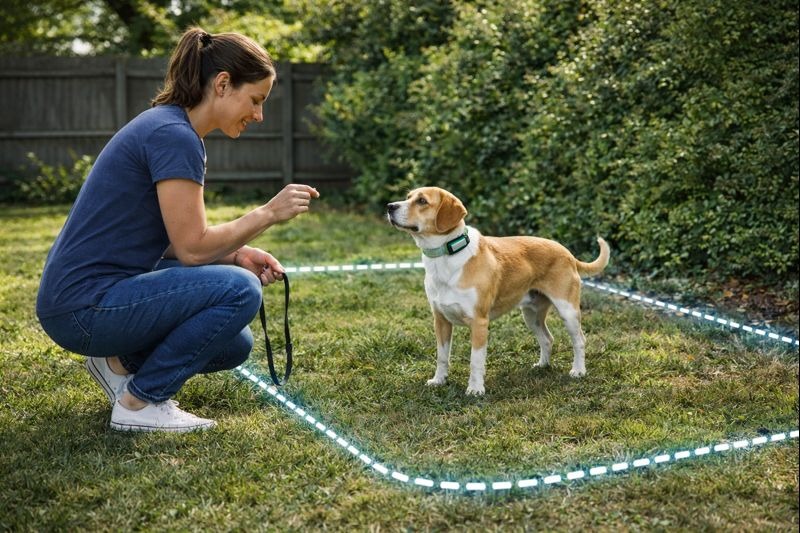
The Correct Way to Teach a Boundary
When we train dogs with virtual fences, we start by walking them toward the boundary slowly. When the beep happens, we guide them back and celebrate that retreat with affection or treats. Over a few days, they learn automatically to respond the right way.
Without this guided process, the beep becomes random noise, or worse, something that scares them.
A Training Success Story
A family in Texas trained their Boxer, Rocky, for about a week. Every day, they walked toward the boundary, waited for the beep, then praised him for turning back. They didn’t rush. They didn’t expect perfection. They simply repeated the process with patience.
By day six, Rocky stopped on his own as soon as he heard the alert. Even when birds distracted him, he paused and returned. The training worked not because the collar was extraordinary, but because the family stayed consistent.
Battery Life: The Quiet Risk Most Owners Overlook
Battery performance becomes part of your daily routine with a virtual fence.
Why Virtual Fences Drain Power Faster
Virtual fences drain battery power quickly because the collar constantly tracks GPS, communicates with the app, and monitors movement. Even though companies advertise long battery life, the real-world life in the fence mode is usually much shorter.
The Reality of Charging Schedules
Most smart collar virtual fences last two to four days. A dog parent charges the collar every night because she worries that even one unexpected outage can cause her dog to wander off. If the battery depletes, the boundary stops functioning.
She is right. A dead collar means no boundary at all.
If someone plans to rely on a virtual fence daily, keeping up with charging becomes part of a normal routine—just like feeding or walking.
The Human Factor Behind Virtual Fence Failures
Many Failures Aren’t the Collar’s Fault. Human assumptions influence success more than expected.
Unrealistic Expectations Lead to Problems
Many of the biggest issues happen because owners assume the collar is a “set it and forget it” device. But a virtual fence requires monitoring, adjustments, training, and realistic expectations.
When Owners Trust Tech Too Quickly
An owner let her dog roam freely on day one. The dog spotted another dog outside the gate and sprinted straight through the boundary without hesitation.
The alert reached her phone after the escape happened. She blamed the collar at first, but afterward admitted she had overestimated what the device could do.
Technology is helpful. But dogs do not operate like apps. Their instincts take over fast.
Virtual Fence vs Physical Fence: The Honest Comparison
Understanding the difference between guidance and restraint helps set expectations.
Why These Two Tools Serve Different Purposes
A virtual fence teaches behavior. A physical fence prevents behavior. Virtual fences give structure, awareness, and a sense of space. They help maintain loose boundaries in large open yards, especially when paired with training.
Why Hybrid Setups Work Best
Physical fences, on the other hand, create absolute restrictions. They work in crowded neighbourhoods, homes with stubborn dogs, or properties surrounded by trees where GPS signals weaken.
A virtual fence becomes most useful when treated as a supportive tool, not as your dog’s primary protection. Many owners use a physical fence for primary containment and a smart collar for monitoring.
No tool needs to replace the other. They serve different purposes.
Choosing the Right Smart Dog Collar With a Virtual Fence: What Truly Matters!
Not all features matter equally in real outdoor use of smart collars.
Focus on GPS, LTE, and Real-World Reviews
When researching collars, it’s easy to get distracted by bonus features like lights, step counters, or social-sharing options. But the qualities that actually matter are GPS reliability, battery performance, LTE strength in your area, durability in your climate, and honest reviews from owners in similar surroundings.
The Same Collar Can Perform Very Differently
The same collar performs differently in different environments. In a Florida suburb with clear skies and strong signal strength, a collar behaved flawlessly for weeks.
The same model struggled in rural New Jersey, where tall pines surrounded the house, and LTE coverage dropped often.
It wasn’t a good or bad collar. It was simply designed for open environments. Real experiences from dog parents in your region matter more than anything written on a box.
Should You Trust a Virtual Fence? The Real Answer
Choosing trust depends on your dog, your yard, and your expectations.
Trust It as Guidance — Not as a Guarantee
You can trust one as long as you treat it as a guide, not a barrier. The system works best when the yard is open, the dog is calm, the training is consistent, and supervision continues during the early stages.
When You Should Be Cautious
It becomes risky when the yard is obstructed, the signal is weak, the dog is impulsive, or the owner expects the collar to replace a real fence. No virtual system can override excitement or instinct in a split second.
Technology can help shape behavior. But dogs live in moments. And in their most excited moment, instinct always takes the lead.
Conclusion: The Question Every Dog Parent Should Ask
A virtual fence can make daily life easier, but it shouldn’t be trusted blindly.
A virtual fence can make life easier. It can give your dog more freedom, make you feel more relaxed during outdoor time, and add a sense of structure and safety. But before trusting one fully, ask yourself a single honest question:
“Will this collar be enough to stop my dog during their most excited moment?”
Consider how your dog behaves during high-excitement situations.
After reading this guide, if your gut says yes, a virtual fence might be a wonderful tool for your home.
If your gut says no, then treat the collar as a supportive layer — not the main boundary keeping your dog safe.
Share your experience if you’ve used one.
The Smart Pet Gears Team (Team SPG) is a group of pet care researchers, product analysts, and writers dedicated to helping dog owners make informed decisions about smart collars, GPS trackers, and pet technology.
Our articles are based on manufacturer documentation, veterinary guidelines, testing insights, and independent analysis to ensure accuracy and transparency.