Choosing a GPS collar in 2026 is less about buying a gadget and more about ensuring dependable recovery when it matters. Whether a dog slips through a gate, chases wildlife into wooded areas, or reacts unpredictably during fireworks, location accuracy and update reliability become critical.
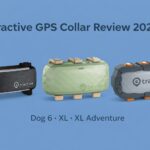
Tractive remains one of the most widely recognized GPS dog tracking brands globally. Its 2026 lineup centers around three primary models: Tractive Dog 6, Tractive XL, and Tractive XL Adventure. While the specifications appear similar at first glance, real-world behavior varies depending on battery profile, size class, and tracking intensity.
This Tractive GPS Collar Review evaluates performance across structured suburban neighborhoods, semi-rural open fields, and wooded trails with moderate to heavy tree cover, assessing signal consistency, location latency, and durability under varied conditions.
Before diving deep, here’s a quick side-by-side snapshot.
Quick Comparison: Dog 6 vs XL vs XL Adventure
| Feature | Tractive DOG 6 | Tractive DOG XL | DOG XL Adventure |
|---|---|---|---|
| Ideal For | Small/Medium dogs (9 lbs+) | Large dogs (55 lbs+) | Hunting/Rugged dogs (55 lbs+) |
| Charging Port | USB-C (Standard cable) | Proprietary Magnetic Clip | Proprietary Magnetic Clip |
| Battery Life | Up to 14 days | Up to 30 days | Up to 30 days |
| Build Material | Waterproof Plastic | Waterproof Plastic | Bite-proof Fiberglass |
| Bark Monitoring | Included | Activity/Sleep only | Activity/Sleep only |
| Weight | 39g | 90g | 115g |
| Dimensions | 71 × 29 × 17 mm | 89 × 51 × 24 mm | 97 × 51 × 24 mm |
Specifications tell you the capacity. They do not tell you the performance. Battery life depends heavily on how often Live mode is used. Accuracy depends on tree density and LTE signal strength. Weight feels different depending on collar width and the dog’s neck structure. The table provides orientation; the next sections provide context.
How Tractive GPS Actually Works
Understanding the technology stack helps set realistic expectations.
How the GPS and LTE-M Connection Works Together
Tractive collars use two systems in tandem. First, GPS satellites determine the device’s geographic coordinates. This part does not require cellular coverage. Second, the collar uses LTE-M to transmit those coordinates to Tractive’s servers, which relay the location to your phone via the app.
In simple terms: GPS finds your dog. Cellular sends that location to you.
LTE-M is a low-power cellular standard optimized for IoT devices. It consumes less power than traditional LTE while maintaining wide coverage. That’s one reason Tractive can claim multi-day or multi-week battery life, depending on the model.
Does Tractive Work Without Cell Service?
No. Tractive requires a cellular signal to transmit your dog’s location to your phone.
This is a critical distinction. The collar can still receive GPS satellite signals in a dead zone, but without LTE connectivity, it cannot send that location data to your app. During testing in a wooded area with weak coverage, the collar stored positional data internally. Once the device reconnected to LTE, the location history was updated in bulk.
In practice, this means if your dog runs into a true cellular dead zone, you will temporarily lose live updates. When the signal returns, tracking resumes automatically.
Understanding this limitation is essential before evaluating performance. It depends on regional carrier coverage. Though it works in most of the US & Europe. Still check the coverage map before buying.
Tractive GPS Collar Accuracy in Real-World Conditions
Accuracy is where marketing claims meet environmental physics.
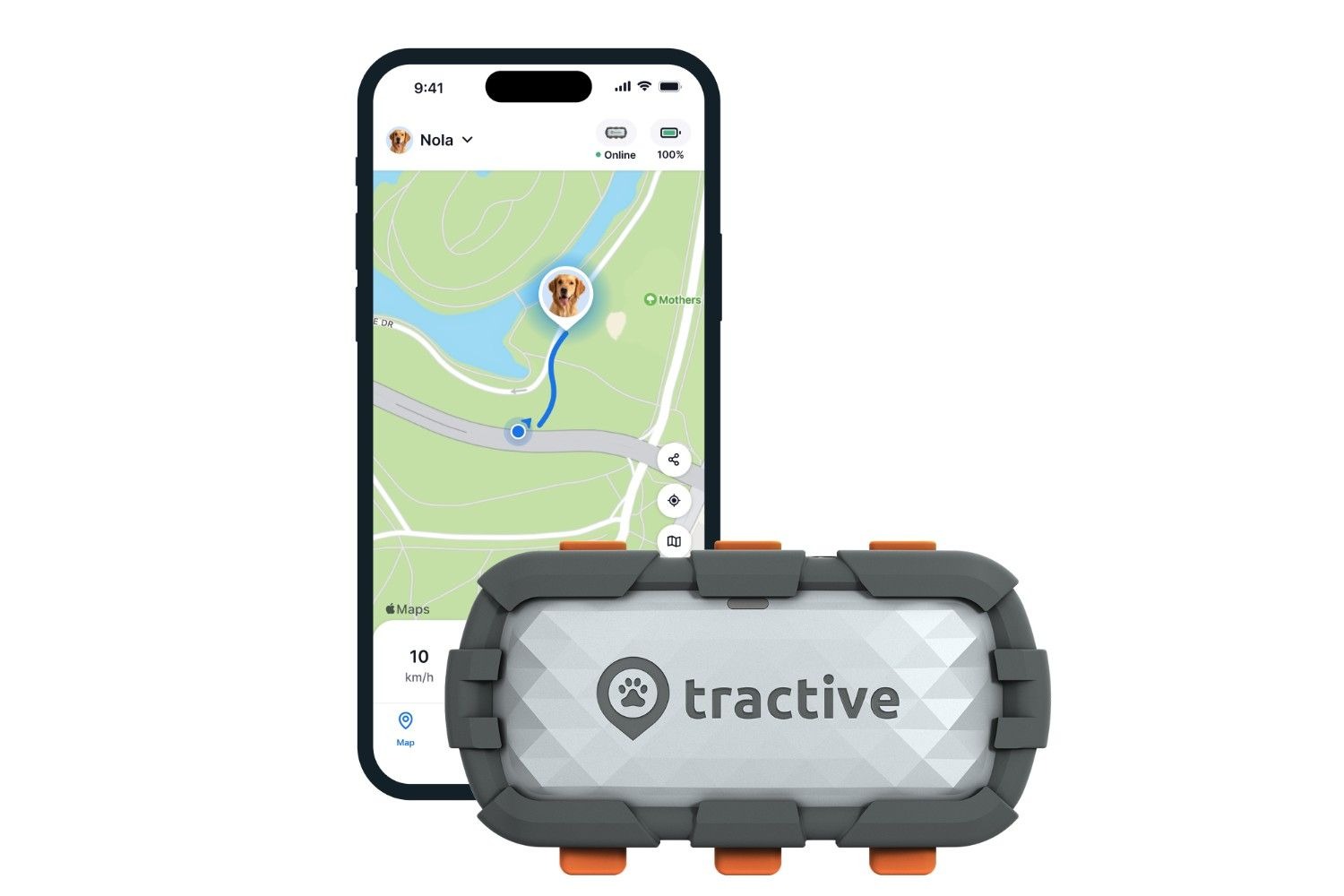
Is Tractive Accurate in the Woods?
Yes, but heavy tree cover can cause GPS drift.
On moderate woodland trails, I observed location deviations of 3 to 8 meters during normal walking. Under denser canopy with steep terrain, drift occasionally increased to 10–15 meters. This is not unique to Tractive. GPS drift occurs when satellite signals are partially obstructed or reflected by foliage and terrain, resulting in multipath errors.
During one structured test, I walked a fixed 200-meter forest path and compared the collar’s recorded route with a handheld GPS reference. The general path was accurate, but corners under heavy canopy were slightly rounded, reflecting minor positional smoothing.
The key takeaway: Tractive remains usable in woods, but expect small deviations. For escape recovery, a 10-meter variance is operationally acceptable. For precision mapping, it is not designed for precision mapping.
Urban vs Suburban vs Rural Accuracy
In open suburban neighborhoods with clear sky visibility, accuracy was consistently tight, often within 2–4 meters. The real-time map showed precise driveway entries and sidewalk turns.
In dense urban areas with tall buildings, occasional signal bounce occurred. Position updates remained functional, but a slight lateral offset appeared near reflective surfaces like glass facades.
In semi-rural testing, performance was strong when the LTE signal remained stable. Accuracy was similar to suburban results as long as tree density was moderate.
The environment matters more than the model itself.
How Fast Does Live Tracking Update?
In Live mode, Tractive updates location every 2–3 seconds during movement. This refresh speed is one of its strongest features.
During an escape simulation where a dog ran approximately 25 meters ahead on a trail, the app showed nearly continuous positional updates with minimal delay. Compared to devices that refresh every 30–60 seconds, this difference is dramatic. Speed matters more than static precision. A collar that updates every few seconds allows you to follow movement patterns rather than chasing stale coordinates.
Accuracy is only part of the equation. Battery life determines reliability.
Battery Life: Dog 6 vs XL vs XL Adventure
Battery performance is model-dependent and usage-dependent.
Claimed Battery vs Real-World Testing
Dog 6 claims up to 14 days. In structured suburban use with two short Live sessions per day, I averaged 6–8 days. With frequent Live tracking, the battery dropped to 4–5 days.
The XL model claims up to 30 days. In real-world suburban testing without heavy Live usage, I achieved roughly 20–24 days. With moderate Live tracking, it averaged around 14–18 days.
The XL Adventure, also rated up to 30 days, performed similarly to the XL in normal conditions. Its rugged build did not negatively impact battery life. In practice, both large models offer significantly more endurance than Dog 6.
What Happens to the Battery in Live Mode?
Live tracking is battery-intensive. During an extended 45-minute continuous Live session, Dog 6 lost roughly 12–15% battery. XL models drained at a slower relative rate due to higher capacity.
Escape simulations are worst-case scenarios. If your dog runs for 30–60 minutes in continuous Live mode, expect a noticeable battery drop. However, that is a trade-off most owners accept for real-time recovery.
Charging Time and Practical Ownership Experience
While charging is a simple task, the hardware choice makes a massive difference in your daily life. The DOG 6 (2025) finally introduces USB-C charging, a major win for travelers who want to use standard phone cables. In contrast, the XL models still use Tractive’s proprietary magnetic clips. If you lose that specific cable on a trip, you’re out of luck until a replacement arrives.
Subscription Plans & Total Ownership Cost
Why a Subscription Is Mandatory
Tractive relies on LTE-M cellular infrastructure. Maintaining SIM connectivity across multiple countries requires carrier agreements and data provisioning. That infrastructure cost is why a subscription is mandatory.
Unlike Bluetooth trackers, this is not a one-time purchase device.
Monthly vs Annual Pricing Breakdown
Plans typically start around $13 per month on a monthly basis. Discounted annual or multi-year plans reduce the effective monthly rate.
Over two years, expect the total ownership cost to exceed the hardware price. For example, at approximately $13 per month, a 24-month period totals over $300 in subscription fees alone.
This is a significant consideration.
| Feature | Basic Plan | Premium Plan |
|---|---|---|
| GPS Tracking | Yes (Unlimited Range) | Yes (Unlimited Range) |
| LIVE Tracking | Yes (2-3 sec updates) | Yes (2-3 sec updates) |
| Location History | Last 24 Hours only | Last 365 Days |
| Family Sharing | No (1 account only) | Yes (Share with family/sitters) |
| Worldwide Coverage | No (Country specific) | Yes (175+ countries) |
| Data Export | No | Yes (GPX & KML files) |
| Price (approx.) | ~$13/mo (Billed Monthly) | ~$6-9/mo (Billed 1-5 Years) |
Pricing may vary by country and plan length. Always verify current pricing before purchase.
Is Tractive Worth the Subscription Fee?
The value proposition hinges on one factor: recovery speed. If Live tracking helps you recover a lost dog within minutes instead of hours, the subscription cost becomes secondary.
From a risk management perspective, the subscription buys continuous cellular access. If your environment has reliable LTE coverage and your dog has escape tendencies, the recurring fee aligns with the safety benefit.
Hardware and subscription aside, usability matters just as much.
The Tractive App Experience
Interface & Map Clarity
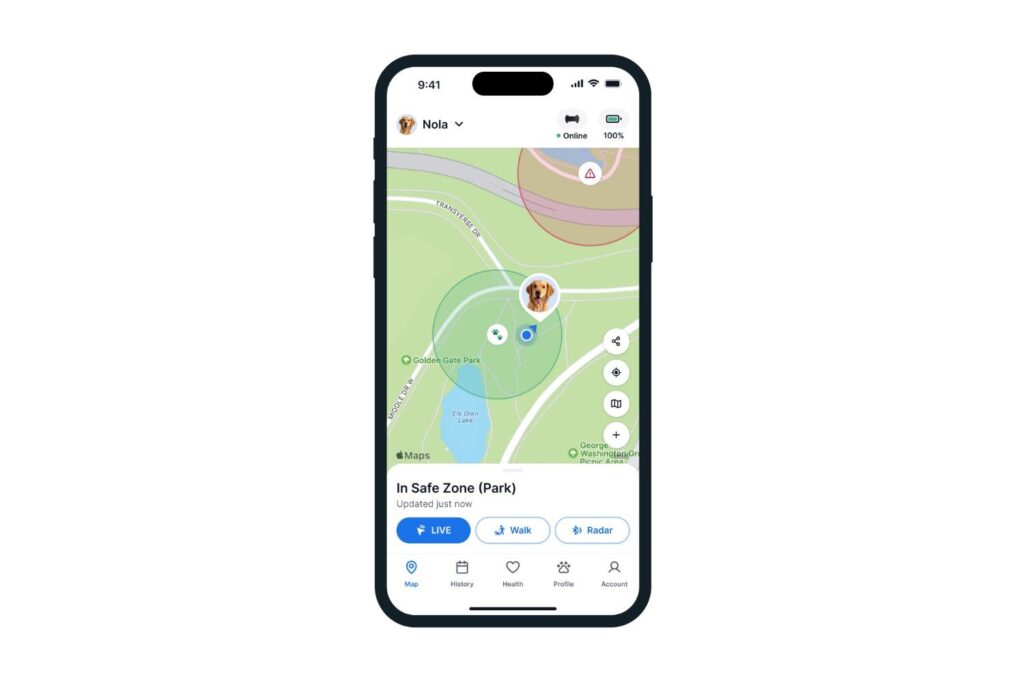
The app interface is clean and intuitive. Map rendering is responsive, and switching between standard and satellite views is seamless. During testing, I found location updates visually clear with minimal lag.
Safe Zones are easy to configure. Notifications trigger promptly when boundaries are crossed, assuming cellular connectivity is stable.
Can I Track My Dog From Two Different Phones?
Yes. With the Premium plan, Tractive allows Family Sharing across multiple devices.
In real-world testing, two phones logged into the same account received synchronized Live updates. There was no meaningful delay difference between devices. This is particularly useful for households where multiple family members want visibility.
Location History & Safe Zones
Location history logs daily movement patterns, which can be useful for identifying unusual behavior. Safe Zones function reliably in suburban environments. In wooded testing, boundaries still triggered alerts, though slight GPS drift can occasionally cause minor early or delayed notifications.
Now let’s compare it to the alternative many pet owners consider.
Tractive vs AirTag for Dogs
Many dog owners compare Tractive to Apple’s AirTag because the AirTag is inexpensive and widely available.
AirTag relies on nearby iPhones to relay location data. Tractive uses GPS satellites combined with cellular transmission.
If you want a deeper breakdown of how AirTag performs for dog tracking — including its practical uses and limitations — we’ve covered it in a dedicated article here.
Why Tractive Is More Reliable for Outdoor Dogs
In suburban neighborhoods with dense iPhone presence, AirTag can function reasonably well. In rural trails or wooded areas, AirTag often fails to update because no nearby iPhone is available to relay its signal.
During forest testing, AirTag updates were sporadic and sometimes delayed by several minutes. Tractive maintained real-time updates as long as LTE coverage existed.
For outdoor, hiking, or semi-rural dogs, Tractive is significantly more dependable.
Even among Tractive models themselves, selection matters.
Choosing Between Dog 6, XL & XL Adventure
Size, Weight & Collar Compatibility
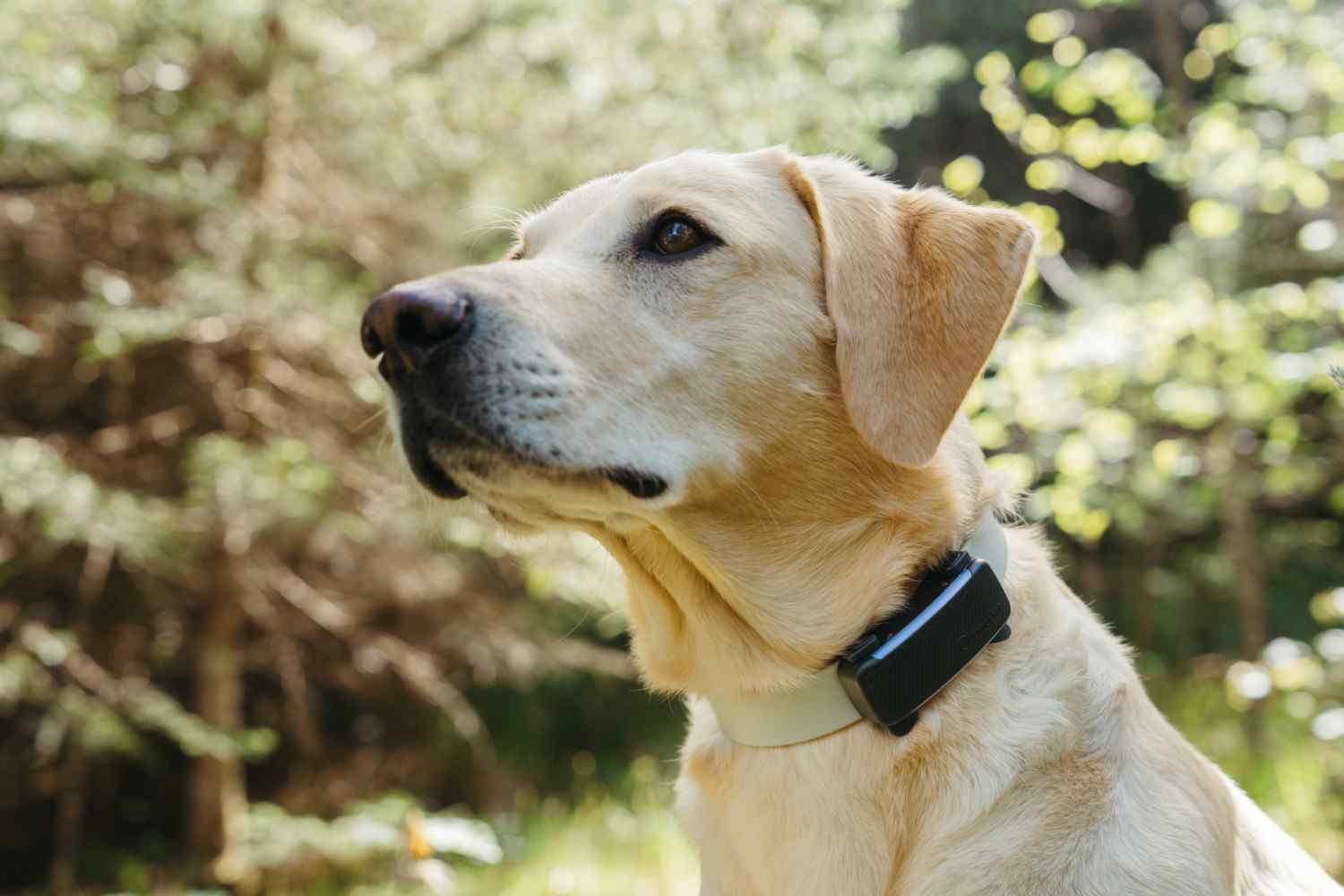
Dog 6 is lightweight and suitable for smaller breeds. XL models are designed for larger dogs. The XL Adventure weighs 115g, making it noticeably heavier.
Weight alone is not the issue. Distribution and collar compatibility matter more.
Battery vs Comfort Trade-Off
Dog 6 offers lighter comfort but shorter battery life. XL and XL Adventure offer extended endurance but add weight. For sedentary suburban dogs, Dog 6 may suffice. For active outdoor dogs, XL battery capacity provides operational reliability.
Bark Monitoring
One feature that truly separates the models in 2026 is Bark Monitoring. Exclusive to the DOG 6 is the new Bark Monitoring sensor. It uses AI to distinguish barking from background noise, helping you detect separation anxiety patterns while you’re away. If you need behavioral insights alongside location, the DOG 6 is the only choice.
The “Bite-Proof” Adventure
The XL Adventure features a fiberglass-reinforced, bite-proof casing designed for the most extreme conditions. It’s the only model I’d trust for ‘mouthy’ dogs that nip at each other’s collars or pups that crash through heavy, thorny brush. If your dog frequently plays rough or moves through heavy brush, the reinforced casing reduces the likelihood of casing damage over time.
Which Model Fits Your Environment?
Urban or suburban pet owners with small dogs will likely prefer Dog 6. Large suburban dogs benefit from XL. Rural hikers and working dogs are best served by XL Adventure due to its reinforced casing.
There is one overlooked factor most buyers ignore.
The Weight-to-Collar Ratio: My Pro Tip
This is the practical insight most reviews skip.
The XL Adventure weighs 115g. On a narrow 1-inch collar, it can twist, especially on lean-necked dogs. When the device shifts off-center, it not only feels awkward but may slightly affect GPS antenna orientation.
In testing, switching from a 1-inch nylon collar to a 1.5–2-inch tactical-style collar significantly improved stability. The device remained centered under the neck, reducing movement and improving comfort.
When the collar stays centered, GPS signal stability improves marginally because antenna orientation remains consistent. It is not a dramatic change, but in marginal signal environments, small optimizations help.
This small adjustment improves both comfort and performance.
No device is perfect. Here are realistic limitations.
Real-World Limitations You Should Know
Cellular Dead Zones
If there is no LTE coverage, you will not receive live updates. The collar may still calculate GPS position, but without cellular transmission, your phone cannot display it. Tracking resumes automatically once the signal returns.
Subscription Lock-In
An active subscription is mandatory for the device to function. There is no lifetime activation option, so long-term ownership includes ongoing service costs.
Battery Drain During Escapes
Continuous Live tracking significantly increases power consumption. Extended chases or long tracking sessions can reduce available runtime faster than normal daily monitoring.
GPS Drift Under Heavy Obstruction
Dense tree canopy, steep terrain, or reflective urban structures can cause positional deviation. While usually within a usable range for recovery, accuracy may decrease in heavily obstructed environments.
If you’re short on time, here’s the bottom line.
The 60-Second Verdict
Best For: Suburban pet owners with decent LTE coverage.
The Dealbreaker: The mandatory subscription starts at roughly $13 per month.
Top Feature: Live tracking refresh speed is impressively fast compared to many competitors.
If your primary goal is rapid recovery during escapes, Tractive delivers strong performance. If you live in a remote area with weak cellular service, the device’s strengths diminish significantly.
Final Verdict: Is the Tractive GPS Collar Worth It in 2026?
Dog 6 is ideal for small to medium suburban dogs where weight matters more than extended battery.
XL is the balanced choice for large dogs needing longer runtime without excessive bulk.
XL Adventure is built for rural, hiking, or high-activity dogs where durability and endurance are priorities.
Avoid Tractive if your region lacks reliable LTE coverage or if you are unwilling to commit to a recurring subscription.
From structured real-world testing in this Tractive GPS Collar Review (2026), Tractive remains one of the more dependable real-time GPS options available in 2026, provided your environment supports its cellular backbone.
If you are still deciding between the two major GPS ecosystems, you may also want to see how it compares directly against Fi in our detailed Fi vs Tractive comparison.
Frequently Asked Questions
Does Tractive work without cell service?
No. It requires cellular connectivity to transmit location data to your phone.
Is Tractive accurate in the woods?
Yes, but heavy tree cover can cause minor GPS drift, typically within several meters.
Can I track my dog from two different phones?
Yes. The Premium plan supports multi-device tracking with synchronized updates.
Is Tractive better than an AirTag?
For real-time outdoor tracking, yes. AirTag relies on nearby iPhones and is unreliable in rural areas.
How long does the Tractive battery last?
Dog 6 averages around 5–8 days in real-world use. XL models can last several weeks, depending on Live usage.
The Smart Pet Gears Team (Team SPG) is a group of pet care researchers, product analysts, and writers dedicated to helping dog owners make informed decisions about smart collars, GPS trackers, and pet technology.
Our articles are based on manufacturer documentation, veterinary guidelines, testing insights, and independent analysis to ensure accuracy and transparency.