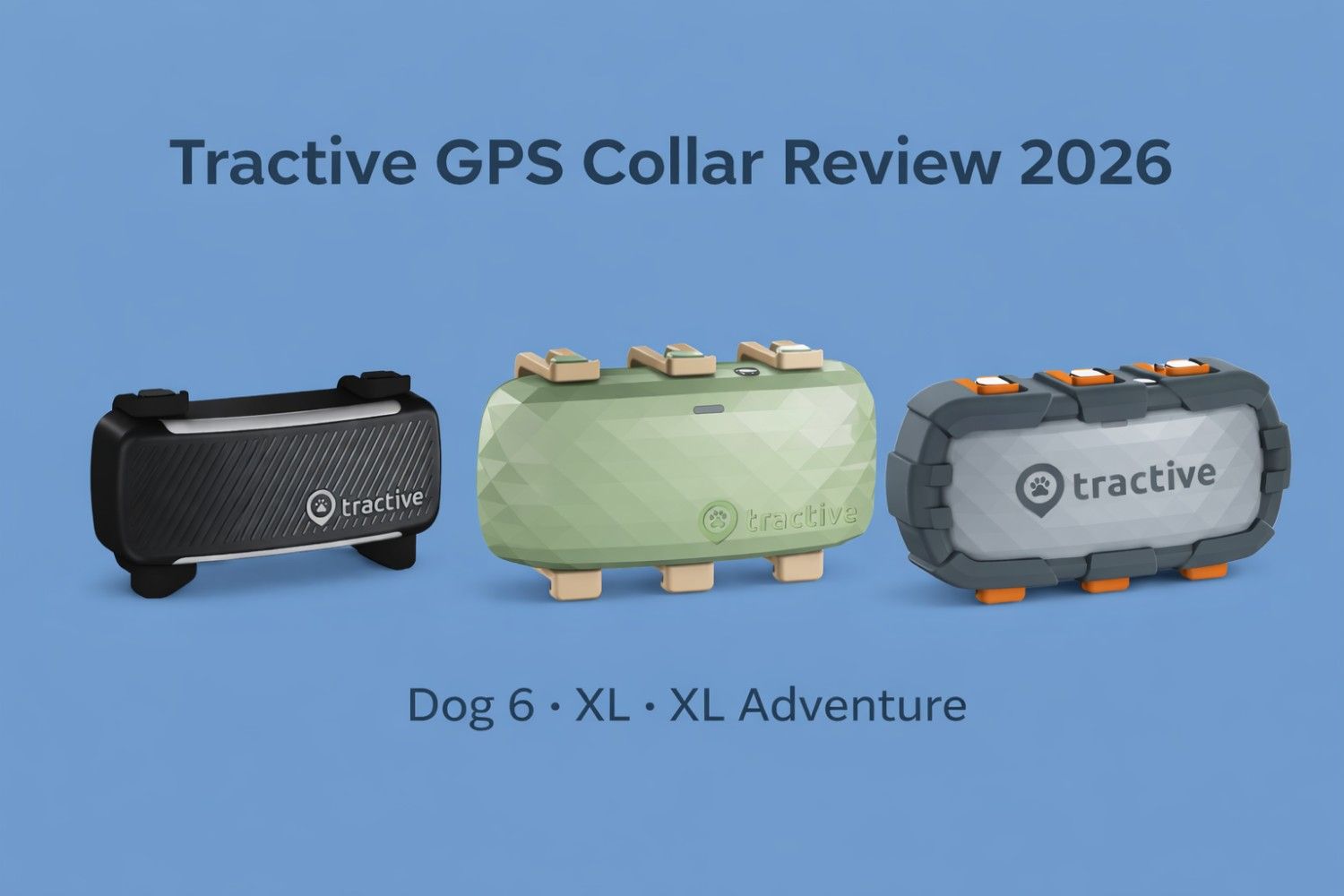
Tractive is one of the most recognized names in the GPS dog tracking market, offering several models including the Dog 6, XL, and XL Adventure.
While all three promise real-time location tracking, activity monitoring, and escape alerts, their real-world performance can vary significantly depending on the environment, usage patterns, and tracking demands.
In this Tractive GPS review, we tested the trackers across suburban neighborhoods, wooded trails, and semi-rural areas to evaluate their tracking accuracy, live update speed, battery performance, health-monitoring features, app experience, subscription value, and overall reliability.
We also compare the key differences between the current models to see where each one performs best. So before diving deep, here’s a quick verdict to start with.
Tractive Dog Tracker: Quick Verdict
Strengths
- Fast 2–3 second live tracking updates
- Reliable GPS performance in most environments
- Excellent battery life on XL models
- Useful health and activity monitoring
- Worldwide coverage with Premium plans
Limitations
- Subscription required
- Live mode drains battery quickly
- Performance depends on LTE coverage
- XL Adventure can feel bulky on some dogs
Tractive Dog 6 vs XL vs XL Adventure: Short Comparison
| Feature | Tractive DOG 6 | Tractive DOG XL | DOG XL Adventure |
|---|---|---|---|
| Ideal For | Small/Medium dogs (9 lbs+) | Large dogs (55 lbs+) | Hunting/Rugged dogs (55 lbs+) |
| Charging Port | USB-C (Standard cable) | Proprietary Magnetic Clip | Proprietary Magnetic Clip |
| Battery Life | Up to 14 days | Up to 30 days | Up to 30 days |
| Build Material | Waterproof Plastic | Waterproof Plastic | Bite-proof Fiberglass |
| Health & Activity Monitoring | Activity, Sleep & Bark Monitoring | Activity & Sleep Monitoring only | Activity & Sleep Monitoring only |
| Weight | 39g | 90g | 115g |
| Dimensions | 71 × 29 × 17 mm | 89 × 51 × 24 mm | 97 × 51 × 24 mm |
This Tractive GPS review focuses on real-world performance rather than manufacturer specifications alone.
The comparison table highlights the key differences between the models, but specifications only tell part of the story. Real-world battery life, tracking accuracy, and overall usability can vary depending on the environment and how the tracker is used.
The following sections examine how each model performs beyond the numbers on the spec sheet.
Tractive GPS Collar Accuracy in Real-World Conditions
Accuracy is where marketing claims meet environmental physics.
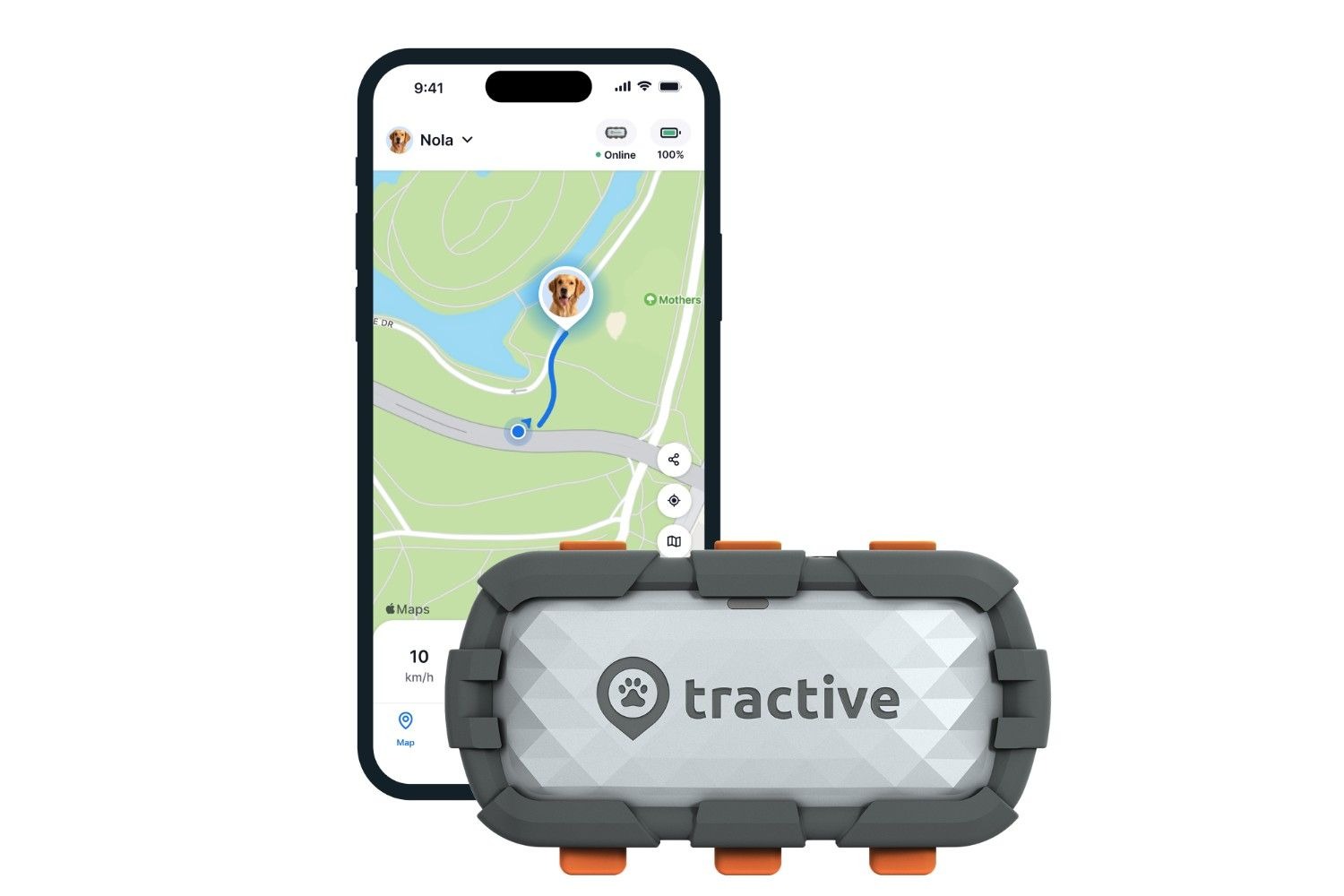
Is Tractive Accurate in the Woods?
Yes, but dense tree cover can reduce GPS accuracy slightly. During testing on woodland trails, Tractive GPS Tracker remained reliable for locating and following movement, though some position drift occurred under heavy canopy.
Key findings from woodland testing:
- Moderate woodland trails: Location accuracy typically remained within 3–8 meters of the actual position.
- Dense canopy and steep terrain: GPS drift occasionally increased to 10–15 meters due to signal obstruction and reflection from trees and terrain.
- Trail tracking: The recorded route generally matched the walking path, though sharp turns under heavy cover were sometimes smoothed out.
- Escape recovery: Even with minor drift, the tracker remained accurate enough to locate a moving dog in wooded environments.
Bottom line: Tractive performs well in forests and wooded trails, but expect small deviations when satellite signals are heavily obstructed.
One of the biggest takeaways from this Tractive GPS review is that environment has a greater impact on accuracy than the specific model.
Urban vs Suburban vs Rural Accuracy
The Tractive GPS tracker performed best in open areas with clear sky visibility, though accuracy remained usable across all test environments.
Key findings:
- Suburban areas: Consistently accurate, often within 2–4 meters.
- Urban environments: Minor location offsets occasionally appeared near tall buildings and reflective surfaces.
- Semi-rural areas: Accuracy remained strong where LTE coverage was stable and tree cover was moderate.
Overall, tracking performance depended more on the environment and cellular coverage than the specific Tractive model.
How Fast Does Live Tracking Update?
One of the biggest strengths of Tractive for dogs is its Live Tracking mode. During movement, location updates typically refresh every 2–3 seconds.
In testing, the tracker provided near-continuous updates with minimal delay, making it much easier to follow a moving dog compared to devices that refresh every 30–60 seconds.
Accuracy is only part of the equation. Battery life ultimately determines how long the tracker can keep working when you need it most.
Battery Life: Dog 6 vs XL vs XL Adventure
Battery life varies significantly depending on the model of Tractive GPS and how often Live Tracking is used.
Claimed vs Real-World Battery Life
| Model | Advertised Battery Life | Real-World Battery Life |
|---|---|---|
| Tractive Dog 6 | Up to 14 days | 6–8 days (4–5 days with frequent Live Tracking) |
| Tractive Dog XL | Up to 30 days | 20–24 days (14–18 days with moderate Live Tracking) |
| Tractive XL Adventure | Up to 30 days | Similar to XL in normal use |
The larger Tractive Dog XL and XL Adventure models delivered noticeably better endurance than Dog 6, making them a better fit for owners who prioritize battery life.
Battery Impact of Live Tracking
Live Tracking is the biggest battery drain on any Tractive GPS tracker.
During testing:
- A 45-minute Live Tracking session reduced Dog 6 battery by roughly 12–15%.
- XL models drained more slowly due to their larger batteries.
- Longer tracking sessions result in a noticeable drop in remaining runtime.
While this is worth keeping in mind, most owners will gladly trade battery life for real-time updates when a dog goes missing.
Charging Experience
The Tractive Dog 6 uses USB-C charging, making it easy to recharge with standard phone cables.
The XL and XL Adventure models still rely on proprietary magnetic charging clips. They work well, but losing the charging cable while traveling can be inconvenient since a standard USB-C cable won’t work as a replacement.
Tractive Subscription Cost & Plans
Unlike Bluetooth trackers such as AirTag, every Tractive GPS tracker requires an active subscription to provide real-time location updates.
The subscription covers cellular connectivity, allowing the tracker to transmit your dog’s location to the Tractive app from virtually anywhere within the coverage area.
Tractive Subscription Plans
Tractive offers both monthly and discounted long-term plans. While pricing varies by region, the Tractive monthly subscription typically starts at around $13 per month, with annual and multi-year plans reducing the effective monthly cost.
| Feature | Basic Plan | Premium Plan |
|---|---|---|
| GPS Tracking | Yes (Unlimited Range) | Yes (Unlimited Range) |
| LIVE Tracking | Yes (2-3 sec updates) | Yes (2-3 sec updates) |
| Location History | Last 24 Hours only | Last 365 Days |
| Family Sharing | No (1 account only) | Yes (Share with family/sitters) |
| Worldwide Coverage | No (Country specific) | Yes (175+ countries) |
| Data Export | No | Yes (GPX & KML files) |
| Price (approx.) | ~$13/mo (Billed Monthly) | ~$6-9/mo (Billed 1-5 Years) |
Note: Pricing may vary by country and plan length. Always verify current pricing before purchase.
Is the Tractive Subscription Worth It?
The biggest ongoing expense is the Tractive subscription cost, which can exceed the initial hardware price over several years of ownership.
That said, the value comes from continuous GPS tracking and real-time recovery capabilities. If Live Tracking helps you locate a lost dog in minutes rather than hours, many owners will consider the recurring cost worthwhile.
Beyond tracking performance and subscription costs, the overall app experience plays a major role in day-to-day usability.
The Tractive App Experience
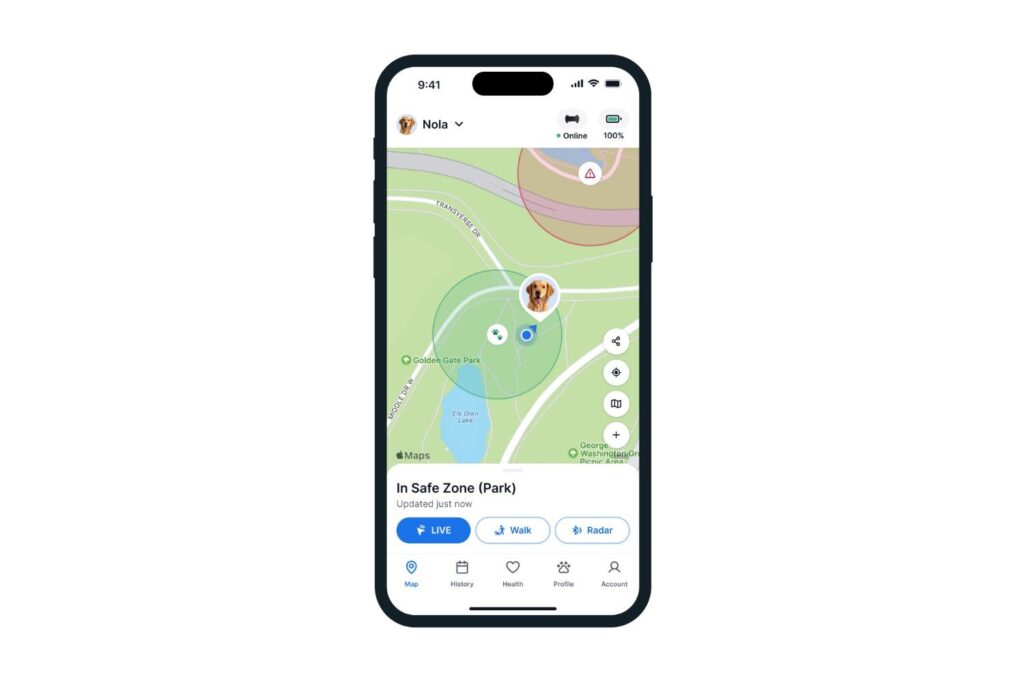
The Tractive app is one of the platform’s strongest features. During testing, maps loaded quickly, location updates appeared with minimal lag, and switching between standard and satellite views felt seamless.
Key app features:
- Real-Time Tracking: Live Tracking updates appear quickly and remain easy to follow on the map.
- Safe Zones: Easy to set up and generally reliable for monitoring home, yard, or neighborhood boundaries.
- Location History: Provides a record of daily movement patterns, which can help identify unusual activity.
- Activity & Sleep Monitoring: Tracks daily activity levels, rest patterns, and long-term wellness trends.
- Family Sharing: Premium plans allow multiple family members to track the same dog from different devices.
- Health Alerts: The app can flag unusual changes in activity or sleep behavior that may warrant closer attention
In testing, notifications were delivered promptly when Safe Zone boundaries were crossed, provided cellular coverage remained stable.
Multiple devices also received synchronized Live Tracking updates with no noticeable delay.
Overall, the Tractive app is intuitive, responsive, and easy to use, making it a strong companion to the Tractive Dog tracker itself.
Tractive GPS Health & Activity Monitoring Features
Beyond location tracking, every Tractive GPS includes activity and sleep monitoring features. The app tracks daily activity levels, rest patterns, and fitness trends, helping owners understand changes in their dog’s routine over time.
Key health features include:
- Activity tracking and fitness goals
- Sleep monitoring
- Wellness trends and historical data
- Health alerts for unusual changes in activity or sleep patterns
The Tractive Dog 6 adds an extra layer of insight with Bark Monitoring, which can help identify changes in barking behavior and potential signs of stress or separation anxiety.
Beyond tracking performance, this Tractive GPS review found the wellness features to be a useful addition for monitoring daily activity.
Tractive vs AirTag for Dogs
The most common alternative considered by buyers is Apple’s AirTag. While both devices can help locate a dog, they work very differently.
Tractive vs AirTag: Key Differences
- Tractive GPS tracker: Uses GPS and cellular networks to provide real-time location updates.
- AirTag: Relies on nearby Apple devices to relay its location.
- Tracking range: Tractive offers virtually unlimited range within supported coverage areas, while AirTag depends on the presence of nearby iPhones.
- Outdoor reliability: Tractive performs more consistently on hiking trails, wooded areas, and rural properties.
During testing, AirTag updates became less reliable in areas with fewer Apple devices nearby. The Tractive dog tracker continued providing real-time updates as long as cellular coverage was available.
For pet owners who need dependable tracking beyond neighborhoods and city streets, Tractive is generally the more reliable option.
If you want a deeper breakdown of how AirTag performs for dog tracking — including its practical uses and limitations — we’ve covered it in a dedicated article here.
Choosing Between Dog 6, XL & XL Adventure
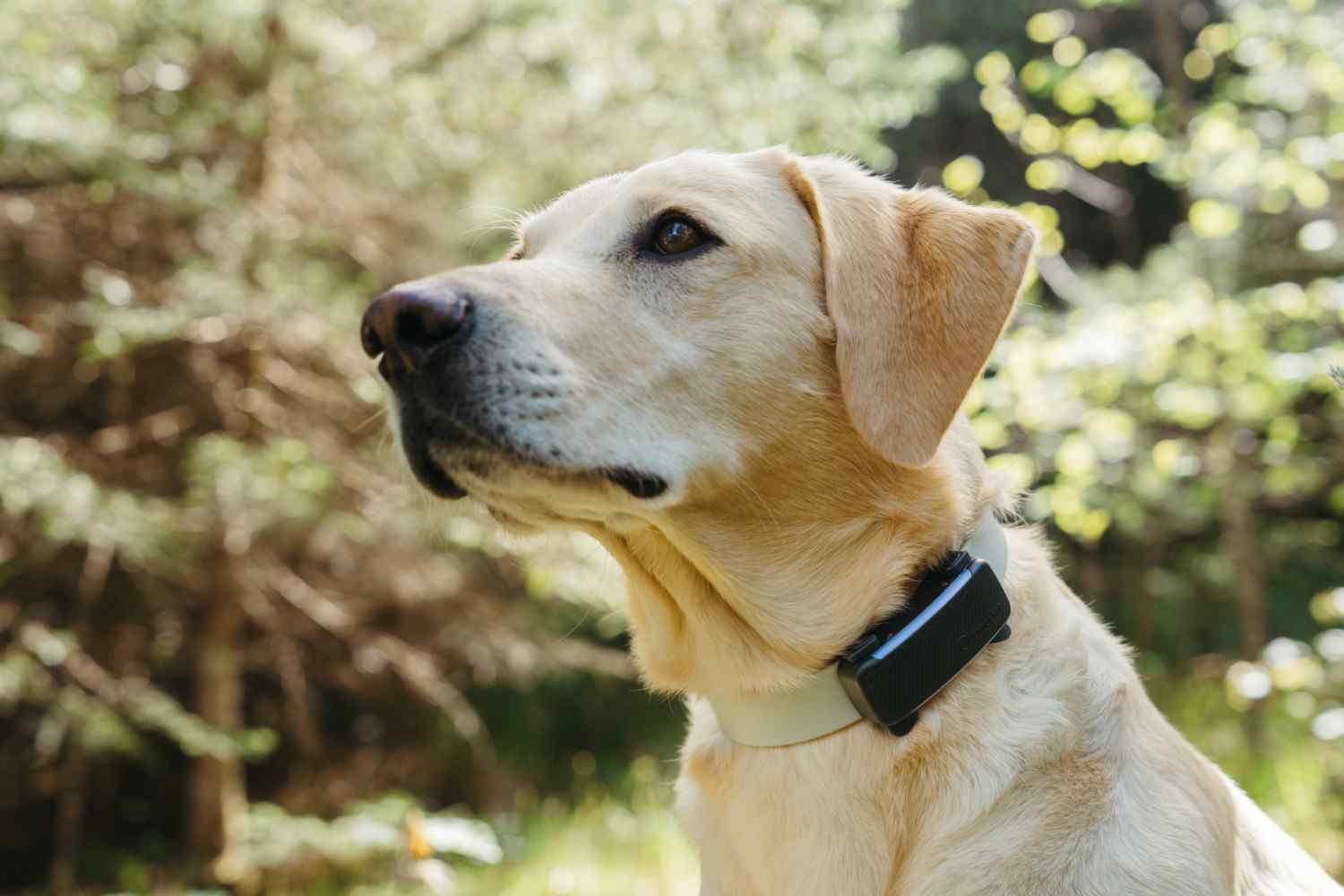
While all three Tractive GPS tracker models offer the same core tracking features, the right choice depends mainly on your dog’s size, activity level, and durability requirements.
Tractive Dog 6
- Best suited for small and medium-sized dogs.
- Lightest model in the lineup at just 39g.
- The only model with Bark Monitoring.
- Uses USB-C charging for added convenience.
Tractive Dog XL
- Designed for larger dogs weighing 55 lbs and above.
- Offers significantly longer battery life than Dog 6.
- A good balance between comfort, runtime, and size.
Tractive XL Adventure
- Built for hiking, hunting, and high-activity dogs.
- Features a fiberglass-reinforced, bite-proof casing.
- Better suited for rough play and demanding outdoor environments.
- Heavier than the standard XL but noticeably more rugged.
For most pet owners, the Tractive Dog XL strikes the best balance between battery life and everyday comfort.
The XL Adventure becomes more compelling when durability is a priority, while Dog 6 remains the best option for smaller breeds and owners who want Bark Monitoring.
Practical Tip for XL Adventure Owners
The Tractive XL Adventure is noticeably heavier than the other models. During testing, it remained more stable on wider collars (1.5–2 inches) than on narrow 1-inch collars, where it was more prone to shifting position.
While this doesn’t dramatically affect tracking performance, a properly fitted collar can improve comfort and help keep the tracker securely positioned during daily activities.
Real-World Limitations You Should Know
No GPS tracker is perfect, and Tractive has a few limitations worth considering before you buy.
- Cellular coverage is required: The Tractive GPS tracker can calculate location without LTE, but it cannot send live updates to your phone until cellular connectivity returns.
- Ongoing subscription costs: Every Tractive dog tracker requires an active subscription. There is no lifetime activation option.
- Battery drains faster in Live Tracking: Continuous real-time tracking consumes significantly more power than normal daily monitoring.
- GPS accuracy can vary: Dense tree cover, steep terrain, and urban obstacles may occasionally reduce accuracy or cause minor position drift.
Most of these limitations are common among GPS trackers for dogs and are unlikely to be dealbreakers, but they are worth understanding before purchasing.
If you’re short on time, here’s the bottom line.
The 60-Second Verdict
Strengths: Fast Live Tracking, reliable GPS performance, long battery life on XL models, and useful wellness features.
Limitations: An active subscription is required, and performance depends on cellular coverage.
Bottom Line: Fast Live Tracking, useful wellness features, and a polished app make Tractive one of the more well-rounded GPS trackers for dogs.
Final Verdict: Is the Tractive GPS Tracker Worth It in 2026?
After evaluating tracking accuracy, battery life, app features, subscription costs, and wellness tools, Tractive remains one of the more complete GPS trackers for dogs currently available.
Live Tracking is fast, the app is easy to use, and the activity and health-monitoring features add value beyond basic location tracking.
The required subscription and reliance on cellular coverage are the biggest drawbacks, but those trade-offs are common among real-time GPS trackers.
Overall, this Tractive GPS review found the platform to be a dependable choice for owners who want both location tracking and ongoing insight into their dog’s daily activity.
If you are still deciding between the two major GPS ecosystems, you may also want to see how it compares directly against Fi in our detailed Fi vs Tractive comparison.
Frequently Asked Questions
Does Tractive work without cell service?
No. It requires cellular connectivity to transmit location data to your phone.
Is Tractive better than an AirTag?
For real-time outdoor tracking, yes. AirTag relies on nearby iPhones and is unreliable in rural areas.
How long does the Tractive battery last?
Dog 6 averages around 5–8 days in real-world use. XL models can last several weeks, depending on Live usage.
Does Tractive require a subscription?
Yes. Every Tractive GPS tracker requires an active subscription to provide real-time location updates and access app features.
Does the Tractive app work on multiple phones?
Yes. Premium plans support Family Sharing, allowing multiple users to track the same dog from different devices.
Which Tractive GPS tracker is best for large dogs?
The Tractive Dog XL is the best choice for most large breeds, while the XL Adventure is better suited for hiking, hunting, and high-activity dogs.
How much does a Tractive subscription cost?
Tractive subscription costs vary by plan and region, but monthly plans typically start at around $13 per month, with lower rates available on annual and multi-year plans.
The Smart Pet Gears Team (Team SPG) is a group of pet care researchers, product analysts, and writers dedicated to helping dog owners make informed decisions about smart collars, GPS trackers, and pet technology.
Our articles are based on manufacturer documentation, veterinary guidelines, testing insights, and independent analysis to ensure accuracy and transparency.