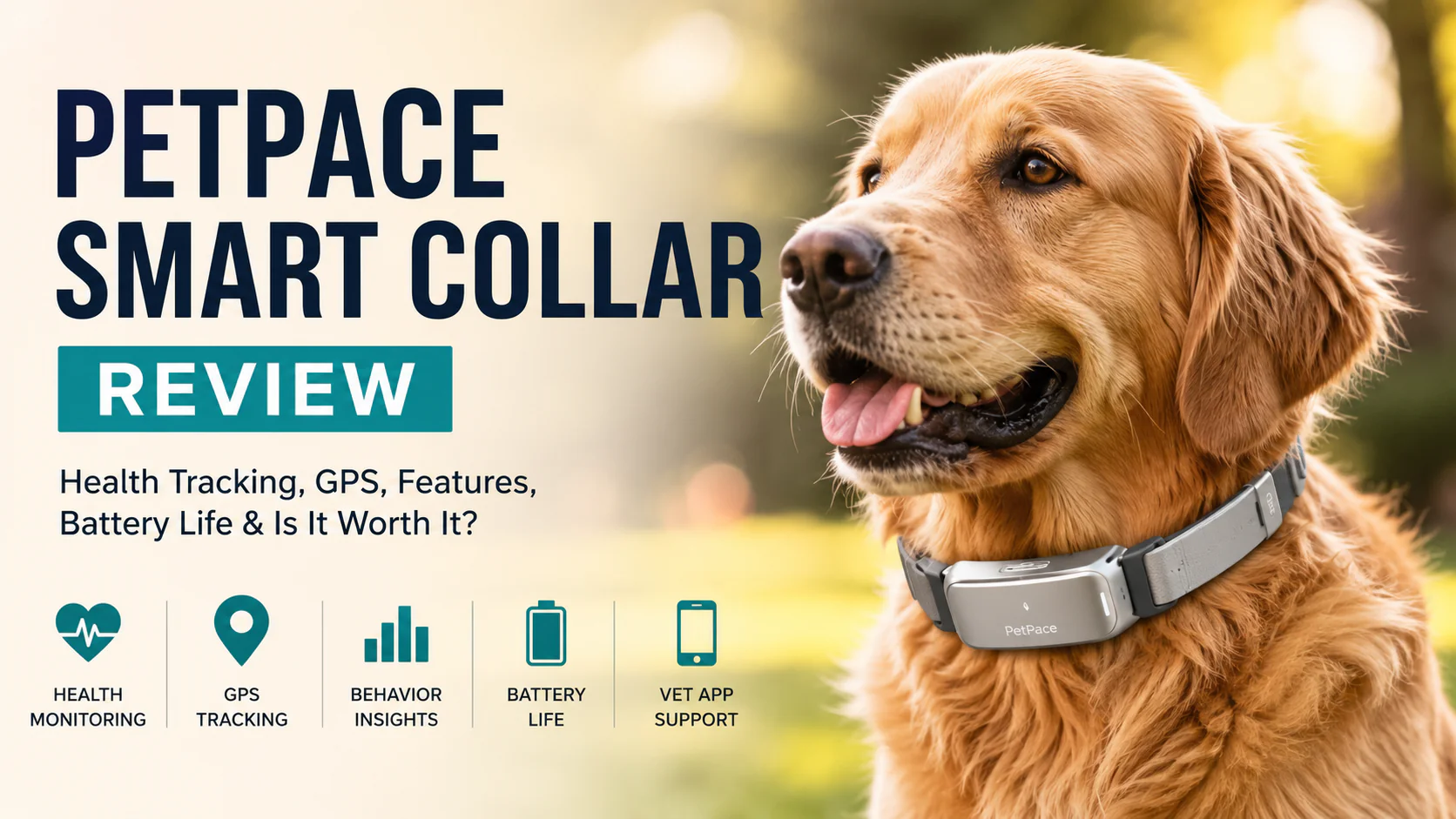
This PetPace Smart Collar Review is not just about GPS tracking or activity monitoring. The collar is designed to monitor your pet’s health continuously using metrics like heart rate, respiration, sleep patterns, posture, and behavior changes.
Unlike collars like Fi or Tractive that mainly focus on location tracking, PetPace positions itself as a health monitoring system for dogs and cats, especially for senior pets, recovery monitoring, and long-term wellness tracking.
But does the PetPace 3.0 Smart Collar actually provide meaningful health insights, or is it simply an expensive subscription-based gadget?
After analyzing its health features, GPS performance, battery life, and real-world usability, here’s where the PetPace Smart Collar excels, where it falls short, and who it’s actually best for.
Quick Verdict: Who Is the PetPace Smart Collar Really For?
The PetPace Smart Collar makes the most sense for pet owners who care more about health monitoring than basic GPS tracking.
If your main goal is:
- escape alerts
- long battery life
- simple walk tracking
then collars like Fi or Tractive are usually the better fit. You can also check our detailed comparison of Fi vs Tractive to see which GPS collar performs better.
But if you have:
- a senior dog
- a pet recovering from surgery
- a dog with arthritis or heart concerns
- an aging cat that needs closer monitoring
- anxiety about missing early warning signs
then PetPace becomes much more interesting.
Its biggest strength is the amount of long-term wellness data it collects. Its biggest weakness is that the experience can occasionally feel overwhelming for casual users who simply want a lightweight smart collar.
Overall, PetPace feels less like a traditional GPS dog collar and more like a wearable pet health monitoring system.
What Makes the PetPace Smart Collar Different From Other Smart Dog Collars?
Most smart pet collars today focus heavily on location tracking.
That’s the core appeal behind products like:
- Fi Smart Collar
- Tractive GPS
- Halo Collar
- FitBark
PetPace takes a different approach.
Instead of centering the experience around GPS, the PetPace smart collar focuses on biometric and behavioral monitoring.
The GPS tracking exists, but it is clearly secondary to the health-monitoring side of the platform.
That distinction matters because it changes the entire purpose of the collar.
The PetPace collar continuously tracks:
- tracks long-term heart rate and recovery trends
- monitors heart rate variability (HRV) to detect subtle wellness changes
- measures respiration patterns and breathing changes over time
- observes temperature fluctuations that may indicate stress or illness
- analyzes posture and movement behavior throughout the day
- tracks sleep quality and nighttime restlessness
- monitors daily activity levels and behavioral shifts over time
The goal is not simply to collect numbers. The system tries to identify unusual changes that could suggest discomfort, stress, illness, recovery problems, or declining wellness over time.
That is what separates PetPace from simpler activity trackers.
Instead of asking: “How many steps did your dog take today?”
PetPace is trying to answer: “Has your dog’s overall condition changed recently in a way that deserves attention?”
That shift makes the collar far more specialized than many competing pet wearables.
PetPace Smart Collar Setup and Daily Use Experience
The setup process is fairly straightforward.
You charge the collar, download the PetPace app, connect the device, and create a profile for your pet. During setup, the app asks for details like:
- breed
- age
- weight
- gender
This information helps the system build more personalized wellness tracking over time.
One thing that becomes obvious quickly is that the PetPace collar is not a minimalist device. Compared to many GPS trackers, it feels larger and more substantial because of the additional sensors built into the collar itself.
For medium and large dogs, this usually is not a major issue. Smaller breeds and some cats, however, may take more time adjusting to the collar size.
The app itself is well organized, although there is definitely a learning curve during the first few days.
Unlike standard pet trackers that mostly show maps and activity numbers, the PetPace dashboard presents:
- wellness scores
- vital sign trends
- sleep tracking
- recovery metrics
- behavioral data
- pain-related indicators
- health alerts
Some owners will love this level of detail while others may find it excessive.
That difference really depends on your personality as a pet owner. If you actively like monitoring trends and health data, the app becomes genuinely interesting after a while.
If you prefer simplicity, the amount of information may start feeling mentally exhausting.
PetPace Health Monitoring Features Explained
This is the section where the PetPace smart collar separates itself from almost every other smart dog collar currently available.
Heart Rate and Respiration Monitoring
The collar continuously tracks heart rate trends and respiration patterns throughout the day.
Now, it’s important to stay realistic here.
PetPace should not be viewed as a replacement for professional veterinary equipment. Wearable devices always have limitations depending on:
- fur thickness
- collar fit
- movement
- positioning
But the real value of PetPace is not necessarily perfect real-time precision.
The value comes from trend monitoring.
For example, gradual changes in:
- resting heart rate
- breathing patterns
- recovery behavior
- nighttime restlessness
can sometimes reveal problems earlier than occasional observation alone.
That becomes especially useful for senior dogs and pets with chronic health conditions.
PetPace Pain Detection and Wellness Tracking
One of the most heavily discussed features of the PetPace smart collar is its AI-driven pain monitoring system.
Dogs and cats are both extremely good at hiding discomfort. Many pets continue eating, walking, and behaving relatively normally even while experiencing pain.
PetPace attempts to identify subtle changes associated with discomfort by analyzing:
- posture
- activity patterns
- heart rate variability
- movement behavior
- recovery changes
This does not mean the collar magically diagnoses pain.
Instead, it looks for deviations from your pet’s normal baseline over time.
That distinction matters because some AI-related marketing claims in the pet-tech industry can sound exaggerated.
Still, this feature has genuine practical value in situations involving:
- arthritis
- injury recovery
- aging pets
- post-surgery monitoring
- chronic illness management
For owners of senior dogs especially, gradual changes can be difficult to notice day by day. Long-term trend tracking can make those shifts easier to spot.
Sleep Monitoring and Recovery Tracking
Sleep quality is one of the more underrated aspects of pet health monitoring. Changes in sleep behavior can sometimes reflect:
- discomfort
- anxiety
- illness
- medication side effects
- declining recovery
The PetPace collar tracks sleep patterns and combines them with activity and wellness trends to create a broader picture of your pet’s condition.
This becomes particularly useful after:
- surgeries
- orthopedic injuries
- chronic pain treatment
- major medical procedures
Rather than relying purely on visual observation, owners can review longer-term behavioral changes inside the app.
We’ve also covered when smart collars actually help anxious dogs and when they don’t in a separate guide.
PetPace Veterinary Monitoring Features
This is honestly one of the strongest parts of the entire platform and something many reviews fail to explain properly.
With the launch of PetPace V3.0, the platform introduced its signature ‘Share With Your Vet’ portal.
Long-Term Health Trend Tracking
The collar stores ongoing wellness data inside the PetPace platform, allowing veterinarians to review historical trends instead of relying only on short clinic visits.
That becomes especially useful because many health problems develop gradually over time.
A dog may appear perfectly normal during a short appointment even though subtle changes have been happening at home for weeks.
For example, PetPace may help identify:
- lower daily activity and slower recovery after walks
- worsening sleep quality and nighttime restlessness
- changes in respiration patterns or overall behavior
- gradual discomfort linked to arthritis or chronic pain
Conditions Where PetPace Can Be Useful
The platform can be particularly useful for:
- chronic illness monitoring, where long-term trends matter more than isolated readings
- post-surgery recovery tracking, helping owners monitor recovery progress at home
- cardiac and respiratory observation, especially for aging pets
- arthritis and pain management, where behavioral changes are often subtle
- weight and wellness tracking through activity and sleep patterns
Why This Feels Different From Standard GPS Collars
Some veterinary clinics and research organizations also use PetPace monitoring systems because continuous passive monitoring can reveal patterns that occasional observation may miss.
This is one of the areas where PetPace feels significantly more advanced than standard GPS collars.
How Accurate Is the PetPace Smart Collar?
Accuracy is probably the most important question buyers should ask before spending money on a health-monitoring collar.
The answer is nuanced.
PetPace appears most useful as a trend-monitoring and early-awareness system and not as a replacement for veterinary diagnostics.
That distinction matters enormously. Wearable pet devices naturally face challenges involving:
- fur density
- loose fitting
- body shape differences
- movement
- breed variation
Some readings may occasionally fluctuate or require adjustment periods while the collar builds your pet’s baseline.
But focusing only on individual measurements misses the bigger picture. The real usefulness comes from identifying:
- gradual changes
- declining recovery
- worsening activity
- abnormal behavior trends
- unusual wellness shifts
In practical use, that long-term visibility may matter more than exact second-by-second accuracy.
PetPace GPS Tracking Performance
The PetPace smart collar does include live GPS tracking, although GPS is clearly not its primary focus.
Where the GPS Works Well
For normal use, the GPS tracking is useful for:
- monitoring your pet’s general location
- tracking walks and outdoor activity
- recovery supervision after surgery or injury
- locating pets during escape situations
Where Other GPS Collars Perform Better
If your priority is:
- ultra-fast tracking updates
- longer battery life
- lightweight GPS-only tracking
then collars like Fi or Tractive may still perform better.
The Main Tradeoff
PetPace features like health monitoring, biometric tracking and wellness analysis naturally use more battery than standard GPS trackers.
PetPace Battery Life and Charging Reality
Battery life is one area where expectations should stay realistic.
Unlike basic GPS collars, the PetPace smart collar is constantly processing health data in the background.
It is simultaneously tracking wellness metrics, syncing information to the cloud, monitoring behavioral patterns, and handling GPS-related functions throughout the day.
What to Expect in Real-World Use
Compared to GPS-only collars like Fi or Tractive, PetPace usually requires more frequent charging. Owners switching from long-battery trackers may notice the difference fairly quickly.
Is the Shorter Battery Life Worth It?
That really depends on your priorities:
- if you value continuous health insights and wellness monitoring, the tradeoff makes more sense
- if you mainly want convenience and long battery life, the frequent charging may feel frustrating
PetPace for Cats: Is It Useful?
Yes, although the platform is currently far more established in the dog market.
PetPace has expanded health-monitoring support for cats as well, particularly for owners who want closer observation of:
- aging cats
- chronic illness
- post-surgery recovery
- behavioral changes
The challenge is that cats can be less tolerant of larger wearable devices compared to dogs. Some cats adapt quickly, while others may resist wearing the collar consistently.
The PetPace 3.0 marks the first time the company has natively calibrated its AI engine for the unique physiology of cats, allowing the platform to better interpret feline-specific behavior, movement patterns, sleep habits, and wellness changes rather than relying on algorithms designed primarily for dogs
Biggest Strengths of the PetPace Smart Collar
Before buying any smart collar, it helps to understand where the product genuinely excels.
The PetPace collar stands out most in areas involving long-term health visibility and passive wellness monitoring.
Its strongest advantages include:
- Detailed health and wellness tracking, including sleep patterns, activity trends, and behavioral monitoring over time.
- Useful monitoring for senior or recovering pets, especially after surgery, illness, or during chronic pain management.
- Better veterinary visibility, with long-term health data that can be shared with vets for ongoing observation.
For owners dealing with aging pets or chronic medical conditions, those features can feel far more valuable than simple GPS tracking.
Biggest Weaknesses and Frustrations
At the same time, the PetPace smart collar definitely is not ideal for everyone.
The biggest drawbacks include:
- Higher long-term ownership costs, since most advanced features depend on an ongoing subscription plan.
- A bulkier and more power-hungry design compared to lightweight GPS-only collars like Fi or Tractive.
- More data and monitoring than casual owners may actually need, especially for healthy young pets.
- An adjustment period for some dogs and cats, particularly smaller pets that are less comfortable with larger wearable devices.
The platform makes the most sense when the health-monitoring side genuinely matters to the owner.
Otherwise, simpler and cheaper smart collars often provide better overall value.
PetPace vs Fi, Halo, Tractive, and FitBark
The easiest way to understand PetPace is by comparing it with other popular smart pet collars on the market.
| Collar | Best For | Biggest Strength | Main Limitation | GPS Tracking | Health Monitoring |
|---|---|---|---|---|---|
| PetPace Smart Collar | Senior pets & health monitoring | Advanced wellness and vital tracking | Expensive subscription costs | Yes | Advanced |
| Fi Smart Collar | Escape tracking & daily use | Excellent battery life | Limited health insights | Excellent | Basic |
| Tractive GPS | Affordable live tracking | Real-time GPS updates | Fewer wellness features | Excellent | Basic |
| Halo Collar | Virtual fencing & training | Containment system | Expensive ecosystem | Good | Limited |
| FitBark | Fitness & activity tracking | Exercise and sleep tracking | No advanced health monitoring | Limited | Moderate |
PetPace goes significantly deeper into health analytics and long-term monitoring.
Final Verdict: Is the PetPace Smart Collar Worth Buying?
The PetPace Smart Collar is one of the few pet wearables that genuinely attempts to move beyond basic tracking and into meaningful long-term health monitoring.
That does not mean it is necessary for every pet owner.
For healthy young dogs, simpler GPS collars often make far more practical sense. But for:
- senior dogs
- medically vulnerable pets
- recovery monitoring
- chronic illness management
- highly health-conscious owners
PetPace offers something most competing collars still do not.
The platform’s biggest strength is not flashy AI marketing or GPS maps. It’s the ability to create a broader long-term picture of your pet’s condition through continuous passive monitoring.
It will not replace a veterinarian. It will not magically diagnose illness. But it may help owners notice gradual changes earlier than they otherwise would.
And for many pet owners, especially those caring for aging companions, that alone can make the investment worthwhile.
Frequently Asked Questions:
Can the PetPace Smart Collar detect health problems early?
The PetPace smart collar is designed to identify unusual changes in behavior, activity, sleep, heart rate, and wellness patterns that may indicate developing health issues earlier than visual observation alone.
Is PetPace better than Fi for health monitoring?
Yes. Fi mainly focuses on GPS tracking and battery life, while PetPace is built around wellness tracking, vital monitoring, recovery observation, and long-term health analysis.
Does PetPace replace regular vet visits?
No. PetPace is designed as a monitoring tool, not a replacement for veterinary diagnosis or treatment. It works best as an additional layer of long-term health observation.
What is the biggest downside of PetPace?
For most owners, the biggest drawbacks are the ongoing subscription costs, bulkier design, and shorter battery life compared to simpler GPS-only collars.
The Smart Pet Gears Team (Team SPG) is a group of pet care researchers, product analysts, and writers dedicated to helping dog owners make informed decisions about smart collars, GPS trackers, and pet technology.
Our articles are based on manufacturer documentation, veterinary guidelines, testing insights, and independent analysis to ensure accuracy and transparency.